Tuesday, December 1, 2015
2015 SUZUKI GSX-R

2015 SUZUKI GSX-R
The GSX-R line is mechanically unaltered for 2015, yet sees an alternate shade plan open on 600, 750, and 1000 models, a copy of the paint arrangement used on the GSX-RR Motogp model seen quite recently ( CLICK HERE for "Suzuki To Test At COTA ) busy to enter the World Championship in 2015. The base expense for the GSX-R600 has been dropped $500 to $11,199, while the GSX-R750 and GSX-R1000 assessing proceeds through to the end ($12,299 and $13,899 independently).

Suzuki 's remarkable GSX-1300R Hayabusa continues into 2015 with standard ABS and an untouched MSRP of $14,599, open in two shade blends: Glass Sparkle Black/ Metallic Thunder Gray; and Pearl Vigor Blue/ Metallic Mystic Silver.

Sunday, November 29, 2015
Suzuki GSX1100E, Superb Classic Four !
Suzuki really stirred up the pot with the GSX1100E of 1980, if you wanted sphincter-searing acceleration at a knock down price the GSX had it all covered.

Suzuki sat back to watch the combined efforts from Honda, Yamaha and Kawasaki flounder in its wake until (with the opposition closing the gap) the EFE was born in 1984, and it had no intention of taking any prisoners.
The GSX1100E motor is astoundingly simple : it has Inline four cylinders, five speeds and one destination, the top of the heap. It builds on the principles established as far back as the GT750 water-cooled two-stroke. The transmission layout is very similar, this design carried on to the GS750, the GS1000 and then the GSX1100.
The crank and gearbox input and output shaft centres are shared with its four-stroke buddies, the basic design of the camshaft drive chain and tensioners is a simple evolution of its forebears. That’s the trick that Suzuki pulled off for the umpteenth time, no crazy ideas, just good old simplicity and brilliance of design that don’t hanker after adulation or adoration, but that does tend to follow after the first time you crank open the throttle on one!
Around the time that the 100 horsepower gate swung open the Big 4 were all capable of producing bikes that could transcend this hurdle but there were many problems which befell them. There were chocolate cams and recalcitrant camchain tensioners and second gear selectors that did and then didn’t.
Big problems emerged when bikes exceeded 200 kilos and 100 HP. But the EFE tore up that risk assessment, and then proceeded to tear up the quarter mile with Pee Wee Gleason on board in mid 10 second order at close to 130mph. These numbers were pretty impressive back then... wait a mo, they’re pretty impressive now ! The reason for this massive rush of ballbusting torque is simple, the development that Suzuki did on the GSX1100 was just the starter, when the main course rolled up the EFE had a totally sorted carb/cam/valve/piston/exhaust combo.

The carbs were just big enough to allow in excess of 110 HP but small enough to encourage high intake velocity which gave near perfect atomisation of the intake charge, hence great midrange and throttle response regardless of gear position or the position of the tacho needle.
The cams, likewise didn’t need crazy lifts or excessive spring pressures to get the job done, just enough was okay thanks. The intake valves increased in diameter by 1mm from 27 to 28mm but the exhaust stayed the same at 23mm. The 76mm pistons are lovely, tough with slim rings, the forgings (not castings) are neatly ribbed under the crown for strength and heat dissipation.
Yet again Suzuki pulled a rabbit out of their hat here, generally speaking, alloys used for casting use a higher proportion of silicone in their mix. This reduces the coefficient of expansion thus allowing tighter piston to wall clearances, the ART alloy used for the forged pistons still allows minimal clearances which were previously unheard of. It might be worth mentioning here that Suzuki’s GS1000R F1 racebikes used pistons crafted by Fred Hadleigh at Omega in the West Midlands.
What is truly amazing is the similarity twixt the Omega design and the later factory pistons as installed in the EFE, and yes I am aware that the 1000R was a two-valver and the GSX has four of ’em, the design clues I’m referring to relate to the internal design as opposed to the piston crown.
Vincenzo Piatti pioneered a fully machinable combustion chamber which optimised compression, valve size and flame travel to burn the precious charge in the most efficient way possible. With this single refinement the GSX and its first cousin, the EFE, stomped off into the distance, any gear, any revs, anytime.
Given the fact that there was so much of everything available at relatively low engine speeds, riding an EFE was rapidly recognised as a good way to spend a Sunday afternoon, they start easily, will run on just about any kind of fuel without complaining, they don’t get hot, they have a huge alternator to fire up the similarly huge headlamp and they don’t wilt after a tankful of abuse. Even 30 odd years after its release the EFE has a loyal band of followers that can’t get enough of that torque-nami, sure they dress ’em up with USD forks and trick swingarms (like Colin Peabody’s lovely bike here) but the stuff that sits under that crackle black cam cover is sacrosanct, the beating heart of a true classic.
The architecture that was laid down back then has not changed, particularly in drag racing circles (or should that be straights?) Whatever, EFE-based bikes, with a few tweaks are running over three seconds quicker down the 1320 than Pee Wee ran at Orange County International Raceway all those years ago, sure they have multi-stage lock up clutches and trick auto boxes and digital everything but underneath are still the rock solid design concepts that haven’t been improved on. With capacities of up to 1600cc by virtue of big pistons and stroker cranks it’s unlikely there will ever be a more appropriate basis for this kind of lunacy as slimmer, modern engines afford less room to grow.
So we have a great spread of everything, reliability, simplicity, strength and power. Can’t last can it? And it didn’t, fuel injection, water cooling and Nikasil plated bores changed what had previously been simple and pure into, well, complicated, and we don’t really do complicated. So the EFE continues to co-exist with its younger siblings, I wonder how things will be in another 30 years? I know which one my money’s on.
Suzuki GSX1100E Specifications
Manufacturing : Suzuki Motor Co.
Model : GSX1100E (EFE)
Production Year : 1972 - 1976
Engine : 4-Stroke, Oil-Cooled, Inline 4 Cylinder DOHC 16-Valve
Bore x Stroke : 72 x 66 mm
Cylinder capacity : 1.074 cc
Fuel Supply System : Carburetor Mikuni 34mm
Compression ratio : 9.5: 1
Transmission : 5 - Speed
Ignition : CDI
Starter : Electric Starter
Max Power : 100 HP @ 8.700 RPM
Max Torque : 85,3 N.m @ 6.500 RPM
Top Speed : 227 Km / h
Dimensions L x W x H : 2.255 x 760 x 1.190 mm
Wheelbase: 1.510 mm
Ground Clearance: 152 mm
Dry weight : 237 kg
Fuel tank capacity: 19 L
Frame : Tubular Steel Double Cradle
Front Suspension : 37mm Kayaba Telescopic Fork
Rear Suspension : Kayaba Dual Shock
Front Brakes : Dual Hydraulic Disc 275mm, 2 Pots
Rear Brakes : Single Hydraulic Disc 275mm, 2 Pots
Front Tires : 3:50 - 19
Rear tires : 4.50 - 17
Saturday, November 28, 2015
New Suzuki KingQuad 750AXi 2011
Suzuki has announced the launch of the 2011 KingQuad 750AXi, KingQuad 750AXi Power Steering, KingQuad 750AXi Camo Edition and the KingQuad 750AXi Power Steering Camo Edition.
This announcement comes just a few weeks after Suzuki announced the early release of the 2011 KingQuad 500AXi Power Steering.
"We are dedicated to producing innovative and exciting products for the 2011 model year." said Steve Bortolamedi, Senior Communications Manager at American Suzuki.
Suzuki is pleased to announce the launch of the 2011 KingQuad 750AXi, KingQuad 750AXi Power Steering, KingQuad 750AXi Camo Edition and the KingQuad 750AXi Power Steering Camo Edition. This announcement comes just a few weeks after Suzuki announced the early release of the 2011 KingQuad 500AXi Power Steering.
All 2011 KingQuads come with a new wrinkle paint finish on the racks and front bumper for increased durability and scratch resistance. With its high-arched fenders and sharp headlights, the Suzuki KingQuad 750 combines sporty appeal and utility strength.

New Suzuki KingQuad
With the addition of Suzuki's advanced Electric Power Steering, the KingQuad 750AXi Power Steering models offer riders lighter steering and even more responsive handling than ever.
A single-cylinder liquid-cooled DOHC 722cc engine powers the KingQuad 750AXi. The big bore facilitates abundant torque, especially in the low-to mid-rpm range. The fuel-air mixture is delivered through Suzuki's own patented fuel-injection system.
A single-cylinder liquid-cooled DOHC 722cc engine powers the KingQuad 750AXi. The big bore facilitates abundant torque, especially in the low-to mid-rpm range. The fuel-air mixture is delivered through Suzuki’s own patented fuel-injection system. The electronic fuel injection provides better throttle response and smoother engine power than a mechanical carburetor. The KingQuad 750 boasts the ultimate power-delivery drivetrain and transmission with three drive modes available: two-wheel drive, four-wheel drive, and front differential-locked four-wheel drive.

New Suzuki KingQuad
The 2011 Suzuki KingQuad 750AXi is engineered to tackle the toughest jobs and nastiest trails without breaking a sweat. It’s loaded with technologically advanced features for impressive all-around performance: the fuel-injected 722cc engine, housed inside the high-tensile steel frame, develops abundant torque (especially in the low- to mid-rpm range), which gives the 750AXi exceptional performance. Independent rear suspension, a locking front differential and a host of other valuable features place the KingQuad 750AXi at the front of the pack.
Transmission Features Suzuki KingQuad 750AXi
• QuadMatic™ CVT-type automatic transmission designed for maximum versatility and convenience – fender-mounted gate-type shifter operation for high/low forward ranges, plus neutral and reverse.
• Compact torque-sensing limited-slip front differential offers more powerful traction plus light steering effort. A differential-lock system provides serious four-wheel-drive traction.
• Convenient handlebar-mounted push-button controls allow the rider to easily select between 2WD, 4WD and differential-lock 4WD to get the right setting for any traction condition.
• Advanced engine brake system minimizes free-wheeling to reduce downhill speed.
Engine Suzuki KingQuad 750AXi:| Bore Stroke | 104.0 mm (4.094 in) x 85.0 mm (3.346 in) |
| Compression Ratio | 10.0 : 1 |
| Engine | 722cc (44.1 cu. in), 4-stroke, liquid-cooled, DOHC |
| Fuel System | Suzuki Fuel injection |
| Ignition | Electronic ignition (CDI) |
| Lubrication | Wet sump |
| Starter | Electric starter |
Chassis Features :
• High-tensile steel frame with special attention given to a balance of rigidity and weight for optimum chassis performance and a comfortable ride.
• Independent double A-arm front suspension (6.7 inches of wheel travel) includes large diameter shock absorbers with 5-way spring preload adjustment.
• Fully independent, A-arm and I-beam rear suspension with long suspension travel (7.9 inches of wheel travel), includes large diameter shock absorbers with 5-way spring preload adjustment and large diameter rear sway-bar.
• Large, 200mm diameter front disc brakes with single-piston calipers designed for strong, reliable braking performance.
| Chassis : | |
|---|---|
| Brakes Front | Disc brake, twin |
| Brakes Rear | Sealed oil-bathed multi-disc |
| Color | Champion Yellow, Great Blue, Black and White |
| Curb Weight | 302 kg (665 lbs) |
| Final Drive | Shaft drive |
| Fuel Tank Capacity | 17.5 L (4.6/3.8 US/Imp gal) |
| Ground Clearance | 270 mm (10.6 in) |
| Overall Length | 2115 mm (83.3 in) |
| Overall Width | 1210 mm (47.6 in) |
| Seat Height | 880 mm (34.6 in) |
| Suspension Front | Independent, double A-Arm, coil spring, oil damped |
| Suspension Rear | Fully independent A-Arm and I-Beam rear suspension with five-way preload-adjustable shock absorbers |
| Tires Front | AT25 × 8-12, tubeless |
| Tires Rear | AT25 × 10-12, tubeless |
| Transmission | Automatic variable ratio (V-belt), with high-/low-range, and reverse |
| Wheelbase | 1280 mm (50.4 in) |

Friday, November 27, 2015
2011 New Suzuki Boulevard M109R
The Suzuki Boulevard M109R is a Cruiser style motorcycle with an MSRP of TBD and is a Carryover for 2011. The award winning Suzuki Boulevard M109R recreated the power cruiser market upon its introduction. Its unique style and exhilarating performance – born of championship-winning Suzuki race heritage – have made it the leader in the class.
For 2011, Suzuki has also released the Boulevard M109R Limited Edition, which adds adds a sporty racing stripe, custom gauges and taillight, and a uniquely styled seat. Also, the M109R Limited Edition is offered in a new Glass Sparkle Black/Candy Max Orange finish.
 New Suzuki Boulevard M109R 2011
Like Suzuki’s sport bikes, the Boulevard M109R balances extraordinary performance with crisp handling, thanks to a technically advanced chassis and suspension, matched by world-class brakes. And when it comes to wrapping that performance package in cruiser styling, a picture is worth a thousand words. Check out its sleek, flowing lines and GSX-R inspired styling touches, and you’ll realize that the Boulevard M109R is in a class of its own.
The award winning Suzuki Boulevard M109R recreated the power cruiser market upon its introduction. Its unique style and exhilarating performance – born of championship-winning Suzuki race heritage – have made it the leader in the class.
The Boulevard M109R's exhilarating performance begins with its 109 cubic inch, fuel injected V-twin engine. It's tuned to produce massive torque all the way from idle to redline, which translates into acceleration that you just have to feel to believe. It’s the most powerful cruiser Suzuki has ever produced. To reward every one of your senses, the big V-twin also produces a throaty, aggressive exhaust note — just what you’d expect from the hottest cruiser on the road.

New Suzuki Boulevard M109R
Chassis Features:
- A high-tensile double cradle steel frame is built to comfortably handle all the power and torque while delivering agile handling and a plush smooth ride.
- Inverted front forks featuring race-proven cartridge internals with 46mm stanchion tubes provide 5.12-inches of wheel travel.
- A cast aluminum alloy swingarm works with a progressive shock linkage and a preload adjustable single rear shock delivers 4.66 inches of wheel travel working through a shaft drive system.
- The Boulevard M109R front brake system includes radial mounted four piston front calipers and 310mm front brake rotors. The rear brake system includes a dual piston caliper and 275mm rear disc.
- Spiral spoke cast aluminum alloy wheels measure 3.50 x 18 inch up front and a massive 8.50 x 18 inch rear. The rear wheel wears a huge 240mm rear Dunlop radial tire-the largest ever used on a Suzuki motorcycle.
New for 2011: The M109R features an instrument cluster with a digital tachometer and LED indicator light; a newly included gear position indicator; and it is now relocated from the handlebars to the top of the headlight cowl. In addition the M109R will be available in Candy Indy Blue.
The Boulevard M109R's exhilarating performance begins with its 109-cubic-inch, fuel injected V-twin engine. It's tuned to produce massive torque all the way from idle to redline, which translates into acceleration that you just have to feel to believe. It’s the most powerful cruiser Suzuki has ever produced. To reward every one of your senses, the big V-twin also produces a throaty, aggressive exhaust note—just what you’d expect from the hottest cruiser on the road.
Like Suzuki's sport bikers, the Boulevard M109R balances extraordinary performance with crisp handling, thanks to a technically advanced chassis and suspension, matched by world-class brakes. And when it comes to wrapping that performance package in cruiser styling, a picture is worth a thousand words. Check out its sleek, flowing lines and GSX-R inspired styling touches, and you'll realize that the Boulevard M109R is in a class of its own.
New for 2011: The M109R features an instrument cluster with a digital tachometer and LED indicator light; a newly included gear position indicator; and it is now relocated from the handlebars to the top of the headlight cowl. In addition the M109R will be available in Candy Indy Blue.

Engine Features:
- The Boulevard S40 features a 652cc, SOHC, single-cylinder four-stroke engine with TSCC (Twin Swirl Combustion Chambers) cylinder head and high mass crankshaft that produces strong low-end power and torque.
- A black engine case and cylinder with polished cylinder head fins offers a finished appearance. Zinc-plated cylinder mounting bolts (a high quality plated finish that is corrosion resistant) blends with the black engine color for a more detailed appearance.
- An electric starter with automatic decompression system provides quick, easy engine starting.
- The Boulevard S40 is equipped with a precision electronic ignition system with maintenance-free battery.
- The Boulevard M109R features a massive 112mm bore and 90.5mm stroke, utilizing huge 112mm forged aluminum alloy pistons with short skirts, and cut away sides riding on chrome moly steel connecting rods.
- Each engine bore is lined with Suzuki's race proven SCEM (Suzuki Composite Electrochemical Material) for optimum heat transfer, tighter piston-to-cylinder clearances and reduced weight.
2011 M109R Motorcycle Suzuki Specifications:
Chassis:
- Overall Length 2450 mm (96.5 in)
- Overall Width 875 mm (34.4 in)
- Wheelbase 1710 mm (67.3 in)
- Ground Clearance 130 mm (5.1 in)
- Seat Height 705 mm (27.8 in)
- Curb Weight 347 kg (764 lbs)
- Transmission 5-speed constant mesh
- Final Drive Shaft drive
- Suspension Front Inverted telescopic, coil spring, oil damped
- Suspension Rear Link type, coil spring, oil damped
- Brakes Front Disc brake, twin
- Brakes Rear Disc brake
- Tires Front 130/70R18 M/C 63V tubeless
- Tires Rear 240/40R18 M/C 79V tubeless
- Fuel Tank Capacity 19.5 L (5.2 US gallons)
- Fuel Tank Capacity CA 18.5 L (4.9 US gallons)
 Suzuki Boulevard M109R
Big single-cylinder motorcycles are timeless, and the 2011 Suzuki Boulevard S40 keeps this tradition alive.
The S40 offers an optimal blend of low- and mid-range torque in a design that has proven reliability. This motorcycle keeps it simple, allowing riders the simple pleasure of motorcycling.
For 2011, the Boulevard S40 is available in two new color schemes: Pearl Mirage White/Metallic Veil Silver and Metallic Fox Orange/Glass Sparkle Black.

Suzuki Boulevard M109R New 2011
Tuesday, November 17, 2015
Suzuki RM-Z 450-2011
2011 Suzuki RM-Z450


Due to the numerous wins their motocross bikes have, this formula has proven to be successful for Suzuki. And their goal for 2011 was to make their championship-winning machine even more potent right out of the crate.
Chassis Features:
- The RM-Z450's slim chassis design makes for a comfortable riding position, opening up the cockpit to help allow the rider to actively take control of the machine.
- Class-leading 47mm Showa inverted forks provide optimum wheel travel and are compression- and rebound-damping adjustable.
- A Showa piggyback-reservoir rear shock with high/low-speed compression damping adjustment and rebound damping and spring preload adjustments. The rear shock, working through Suzuki's superlative rising-rate linkage system, provides 310mm of wheel travel, delivering maximum traction.
- The RM-Z450's twin-spar aluminum frame and swingarm was developed and refined for a highly optimized balance between rigidity and superb high-speed traction. The lightweight swingarm helps enhance terrain-traversing performance over bumps.
- The RM-Z450's 449cc four-stroke, liquid-cooled, DOHC, four-valve, fuel-injected engine was developed and refined to deliver phenomenal idle-to-redline thrust.
- The lightweight, battery-less, motocross-use electronic fuel injection system uses progressive throttle linkage for efficient power delivery.
- Displacement 449cc, 4-stroke, liquid-cooled, single cylinder, DOHC
- Fuel System Suzuki fuel injection
- Starter Primary kick
- Ignition Electronic ignition (CDI).
Saturday, November 14, 2015
2011 Suzuki Hayabusa And Specifications


With performance credentials that have established it as the hottest sportbike on the planet, the Suzuki Hayabusa is designed for the serious sport rider who will settle for nothing less than the best.
Lightweight aluminum alloy pistons with a compression ratio of 12.5:1 are used for maximum performance in all conditions. Hard, smooth chrome-nitride Physical Vapor Deposition (PVD) coating on the upper compression and oil control rings on each piston reduces friction while improving cylinder sealing.
The Hayabusa comes with a bright, durable LED taillight, with clear inner lens and red outer lens.
American Suzuki Motor Corporation makes every effort to present the most current specifications and product features.
CHASSIS:
Overall Length 2190 mm (86.2 in)
Overall Width 735 mm (28.9 in)
Wheelbase 1480 mm (58.3 in)
Ground Clearance 120 mm (4.7 in)
Seat Height 805 mm (31.7 in)
Curb Weight 260 kg (573 lbs)
Transmission 6-speed constant mesh
ENGINE:
Displacement 1340cc, 4-stroke, Liquid-cooled, 4-cylinder, DOHC
Fuel System Suzuki fuel injection
Starter Electric
Ignition Electronic ignition (transistorized)
Friday, November 6, 2015
2011 New Suzuki GSR750

Suzuki GSR750 2011 has been out sketches. Suzuki GSR750 2011 Kawasaki Z750R challengers. It is estimated, GSR750 still using the previous machine. However, the issue said scattered energy will be smaller. The designers succeeded in concocting Suzuki GSR750 re-appearance in 2011. Now, the design is far more aggressive than the existing line of Suzuki nakedbike. Apparently, they tried to cut the distance between the design of the Suzuki Gladius Suzuki B-King.
Later, Suzuki will be faced with FZ8 Yamaha, Aprilia Shiver, Triumph Street Triple, in the streets. GSR750 2011 will perform at Intermot Cologne, held October 6 to 10, 2010. Another newspaper, the event will be launched also Suzuki GSX-R125.
Thursday, November 5, 2015
Suzuki van-van

Who calls a motorbike a Van-Van? Especially in 2003? And, more to the point, why? Well, if you are Suzuki's marketing team, the answer is very simple. Suzuki call their cute little RV125 a Van-Van because they had one in their range in the dark ages, it was popular and it seemed like a good idea to resurrect it. So they did.
To be fair, the new bike does bear more than a passing resemblance to its antediluvian predecessor. The big chrome headlight, spoked wheels, single front disc with a drum on the back, the elderly air cooled single cylinder engine and the retro styling all hark back to a gentler age of motorcycling. Actually that isn't entirely true. The age of motorcycling that they invoke memories from wasn't gentle at all. It was full of evil handling semi reliable overpowered and underbraked animals of motorbikes. And a few gentle souls, which died out as more and more people were converted to the dark side of multi-cylinder high performance biking.
But they do say that what goes around, comes around. And that's certainly the case here, where there seems to be an increasing demand for a commuter bike that isn't a scooter but isn't a missile either. Plenty of people still have sufficient prejudice against scooters that they need something with big wheels, but at the same time they have a sufficiently realistic view of their abilities to limit the performance available to them. The bombsites that masquerade as road surfaces in our cities mean that a commuter needs pretty plush suspension, while the occasional need to go up the kerb to reach that last parking bay means that big balloon tyres will be a major plus. The seat needs to be large enough to handle a full size bottom and there needs to be some luggage capacity.
Suzuki GSX-R750 2011 Reborn

Suzuki GSX-R750 2011
The GSX-R750 is outfitted with a 750cc 4-cylinder engine with a race-proven oversquare bore/stroke ratio for efficient, high-revving output.
The GSX-R750 is equipped with a new 4-into-1 stainless-steel exhaust system featuring a titanium muffler, which carries a Suzuki Exhaust Tuning (SET) valve. The system maximizes torque and improves throttle response, especially in the low-to-mid RPM range.
Advanced, race-developed transistorized ignition control circuit helps maintain more precise ignition timing across the range of engine temperature.
The GSX-R750 powerplant utilizes forged pistons, shot-peened conrods, chrome-nitride-coated upper compression and oil control rings, and pentagonal ventilation holes for outstanding engine performance.
The Incredible Suzuki GSX-R600 2011

Suzuki GSX-R600 2011
Impressive performance, exceptional handling and remarkable modern sport-styling prove the all-new redesigned 2011 GSX-R600 is a class-leading sport bike worthy of its race-winning GSX-R heritage. The GSX-R600's responsive and agile ride results from a new lightweight chassis with a compact wheelbase and race-developed suspension. Whether you’re tearing up the streets or dominating the racetrack, the all-new GSX-R600 is designed to offer unparalleled performance for all riding levels.
A compact, powerful 599cc 4-cylinder engine demonstrates the advanced race-proven technology of the GSX-R line when you hit the throttle and push the RPMs to the redline. The GSX-R600. Designed to be the top performer in its class—it’s the total package ready to Own The Racetrack.
The King Of Speed Suzuki Hayabusa 2011
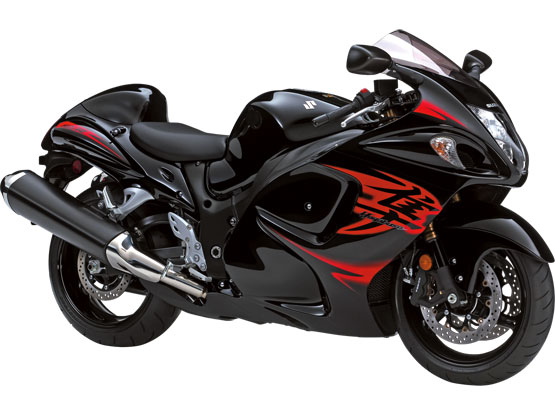
2011 Suzuki Hayabusa Features
Engine Features
The Hayabusa is equipped with a 1340cc, in-line, DOHC liquid-cooled engine with 16-valves, and Twin Swirl Combustion Chambers (TSCC).
Lightweight aluminum alloy pistons with a compression ratio of 12.5:1 are used for maximum performance in all conditions. Hard, smooth chrome-nitride Physical Vapor Deposition (PVD) coating on the upper compression and oil control rings on each piston reduces friction while improving cylinder sealing.
Suzuki Composite Electrochemical Material (SCEM) cylinder plating improves heat transfer, durability and ring seal.
Lightweight titanium valves allow the use of light valve springs and high lift while maintaining accurate valve control. Iridium spark plugs are used for high combustion efficiency.
The Hayabusa's engine is fed via Suzuki's SDTV (Suzuki Dual Throttle Valve) fuel injection system with dual 12-hole, fine-spray injectors per cylinder and ram air intake with large volume airbox.
Suzuki Pulsed-secondary AIR-injection (PAIR) system ignites unburned hydrocarbons and reduces carbon monoxide emissions.
S-DMS (Suzuki Drive Mode Selector) allows the rider to choose from three different engine settings depending on riding conditions or rider preferences
The Hayabusa comes with a large volume 4-2-1-2 exhaust system with a large capacity catalyzer, dual triangular canisters and closed loop system.
A high efficiency curved radiator features dual electric fans controlled by the ECM for increased cooling capacity. The oil cooler has 10 row cores for increased heat dissipation.
New Sport Touring Suzuki GSX1250FA 2011

2011 Suzuki GSX1250FA
Boldly styled and impressively powerful, the GSX1250FA is prepared to provide excitement whether you’re out touring, commuting or if you’re simply out having some fun. The GSX1250FA, with its sportbike DNA, is a machine that can define a weekend, but can also be relied on every day of the week. The fully faired GSX1250FA has a fuel injected double overhead camshaft (DOHC) powerplant packing 1255cc of power at your service. Delivering a wide spread of power, starting low down in the rev range, the six gear transmission takes full advantage of this torque, resulting in extra smooth acceleration and inspiring power delivery
a perfect combination for long distance rides. The GSX1250FA. Exciting, stimulating and tailored for sporting comfort. It’s an all-around performer and an exceptional value.
Suzuki GSX-R1000 25th Anniversary Edition 2010

GSX-R1000 "25th Anniversary Edition" Special Features
- Special color : Metallic Mat Titanium Silver / Pearl Mirage white (JCU).
- Special logo color.
- Laser-processed pinstripe "25th Anniversary Edition" on rims of front and rear wheels.
- Special graphic "25th Anniversary Edition" on both right and left side mufflers.
- Serial number plate on the yoke (Limited production : 1,000 units).
- Ignition key with special GSX-R logo color.
GSX-R1000 Features
- 999cm3 4-cylinder powerplant, designed lighter and 59.7mm shorter from front to rear, brings enhanced throttle response across the entire rpm range and high potential for racetrack performance.
- The new compact engine enabled 10mm shorter wheelbase and 32mm longer swingarm to improve racetrack performance.
- New, more over-square bore x stroke of 74.5mm x 57.3mm (changed from 73.4mm x 59.0mm) gives the engine better overall tuning potential. The compression ratio is now 12.8:1, changed from 12.5:1.
- The engine employs enlarged titanium valves in diameter, forged pistons, shot-peened conrods and Suzuki Composite Electrochemical Material (SCEM)-plated cylinders integrated into the crankcase, reducing friction and improving heat transfer, durability and ring seal.
- 12-hole fuel injectors produce a finer fuel mist for more complete combustion, reducing fuel consumption and exhaust emissions.
- Suzuki Drive Mode Selector (S-DMS) offers push-button selection of three performance settings to suit riding conditions and personal tastes. Now the switch is relocated on the left handlebar control module.
- Iridium spark plugs produce a stronger spark for better combustion.
- Large, efficient radiator with a trapezoidal shape developed on factory team racebikes and a trapezoidal engine oil cooler both help reduce drag.
- Cable-operated back-torque-limiting clutch makes for efficient clutch operation with superb feel.
- Unique Suzuki Advanced Exhaust System (SAES) uses an under-engine chamber and low-slung, large-volume MotoGP-inspired titanium mufflers.
- Twin-spar cradle frame made of five cast sections, mated with an arched swingarm made of three castings and one-piece die-cast rear subframe.
- Big Piston Frontforks (BPF) with an endurance-race-proven design deliver superb feedback and responsive, stable operation, and are lightweight.
- Rear shock absorber features adjustable rebound damping, spring preload, and both high-speed and low-speed compression damping.
- Front brakes with fully floating 310mm discs and rigid, lightweight race-proven monoblock aluminum casting alloy radial-mount calipers.
- The edgy and clean GSX-R1000 styling incorporates fairing and bodywork details aimed at reducing turbulence and drag.
- Attention to rider comfort includes a carefully shaped seat and adjustable footpegs. Tailsection cover included for solo rides or track days.
- Sculpted fuel tank is lighter, while capacity remains 17.5 liters (4.6 US gal).
- New look multi-reflector headlight with vertically stacked high and low-beam halogen bulbs centered between position lights on each side.
- For Europe, the position lights each have layered lenses with blue coloring on the inside lens for an even sportier look.
- Front and rear turn signals feature clear lenses over amber bulbs.
- Instruments include a silver-ringed analog tachometer with LCD speedometer. LCD readouts include odometer, dual trip meters, reserve trip meter, clock, coolant temperature/oil pressure warning indicator, gear position indicator, lap timer/stopwatch, S-DMS setting indicator and bar-graph indicating the instrument lighting level, or brightness.

2010 Suzuki GSX-R1000 25th Anniversary Edition - Specifications
MSRP: $TBA USD
Engine Type 4-stroke, 4-cylinder, liquid-cooled, DOHC
Bore x Stroke 74.5 mm x 57.3 mm
Engine Displacement 999 cm3 (cc)
Compression Ratio 12.8 : 1
Carburetion Fuel injection
Oil Capacity (overhaul) 3.6L (3.8 US qt.)
Ignition Electronic ignition (Transistorized)
Starter System Electric
Lubrication System Wet sump
Transmission 6-speed constant mesh
Primary Drive Ratio 1.617 (76 / 47)
Final Drive Ratio 2.470 (42 / 17)
Frame Type Twin-spar (aluminum alloy)
Rake/Trail 23.8 degrees / 98 mm (3.86 in.)
Suspension Front Inverted telescopic, coil spring, oil damped, spring preload fully adjustable, rebound and compression damping force fully adjustable
Rear Link type, coil spring, oil damped, spring preload fully adjustable, rebound and compression damping force 2-way fully adjustable
Wheels Front 17 M/C x MT3.50, cast aluminum-alloy
Rear 17 M/C x MT6.00, cast aluminum-alloy
Brakes Front Radial mount, 4-piston calipers 310 mm disc, twin
Rear 1-piston caliper, 220 mm disc
Tires Front 120/70ZR17M/C (58W), tubeless
Rear 190/50ZR17M/C (73W), tubeless
Fuel Tank
17.5L (4.6 US gal.)
Overall Length
2,045mm (80.5 in.)
Overall Width 720mm(28.3in)
Overall Height
1,130mm (44.5 in.)
Wheelbase
1,405mm (55.3 in.)
Ground Clearance 130mm (5.1 in.)
Seat Height 810mm (31.9 in.)
Curb Mass
205kg (452lbs.)
Color: Metallic Mat Titanium Silver / Pearl Mirage White (JCU)

Suzuki TL1000S, A Bad Boy Bike !
The original aim was to buy a bad boy of a bike, the most deranged machine to ever escape the captivity of Japan at the time – a Suzuki TL1000S. I loved the concept of the TL-Series, the looks I was in awe of, the half fairing showing off the motor and the bike signing things off with that platypus of a tail unit. Ultimately, I could just picture myself astride this bike pulling massive wheelies away from the lights and leaving big dark lines at the exit of every corner.

And that’s why I bought a Yamaha YZF R6. Ultimately, I’m a head over heart person, and I found a dealer who was offering a spanking new R6 cheap, but since then, I’ve always hankered after a Suzuki TL1000S. That’s why I was interested to see an absolute minter parked outside JHS Racing. My brain can’t quite work out why someone bought this new and then proceeded to do just 2500 miles over the course of the next 10 years, but at least I had the keys for the day – this was going to be good.
Suzuki TL1000S Stock cans were a bit of a turn-off as the whimper from the 996cc V-Twin Motor was somewhat of a surprise. I was expecting shake, rattle and roll to be generated from those big pistons thrusting up and down, but in return for applying some choke and thumbing the starter, I got a timid tickover. With 105bhp at the rear wheel, in pure power terms, time hasn’t been kind to the Suzuki TL1000S (well, perhaps if you’re used to new bikes like me) but 100bhp is ample for the highways.

So how does the Suzuki TL1000S look today? Well, the muted dark blue didn’t float my boat in the way the original red one did with its gaudy graphics, but the riding position felt eminently usable. Though the fixtures and fittings looked like relics from a bygone era to me, the riding position built by swept bars and high clip-ons feels relevant for cornering action.
It’s different to be on something truly mechanical these days, where your inputs have direct results when applied to the recipient component. My head felt clearer knowing that I was in control of my own destiny, rather than electronics masking any miscreant use (again, it’s what we modern bike riders are used to). Though injected, the drive off the throttle from the motor is clean and punchy in the right zone – anywhere from 4000rpm up. It doesn’t possess a heavyweight’s wallop, but engage the right ratio at the right time and it delivers a hearty thump.
The noise gets better with speed too, with the airbox’s inhalation and motor’s explosions doing their best to mask what little the pipes exhale. But I’m still to see how this engine could have caused the problems that are so associated with the Suzuki TL1000S. It didn’t feel so outrageous that the chassis couldn’t cope. So that meant it was time to coax it. I remember reading so much about the bike’s geometry, weight, power and ultimately its radical rotary damper rear suspension that caused the inherent instability on road. Suzuki TL1000S eases its way through the roads I’m on, and to be honest they’re not the challenge of some, but the bike does what a bike does – it brakes, turns and fires out again. I’m in jeans and a jacket, but I could easily get a knee-down if I was properly attired.

Time has been relatively kind to the Suzuki TL1000S here. Okay, so the brakes don’t bite hard on the first squeeze and the tyres need plenty of time to warm up before they hark back to their youth and start gripping, but the action of cornering itself is sweet. It tips in well; not super quick, but quickly enough. It struggles a bit to hustle it through a roundabout, as much an indication of weight and its centre of gravity, but it delivers precisely what it set out to achieve – to be an A and B-road bahn-stormer.
And there’s so much potential here. If you get in at the ground floor with something a bit shabby you can spend what you saved in honing the Suzuki TL1000S to something near perfection – new cans lop weight and add power, refreshed suspension delivers more poise and added precision, new lines and pads return the bite to the brakes. There really is life in almost any old dog, but this one is a bit too pristine. I want a shabby old sleeper that looks rough but goes well.
My rose-tinted visor thought the Suzuki TL1000S would be a belter, offering manful power and requiring manful control. But it’s a bit of a pussycat, all told. It got a reputation as it couldn’t deliver much else to be honest – and suckers like me dined out on this controversy. I’m not saying it didn’t have issues, because it did, but the biggest issue it had was the people on top trying to force it to be a GSX-R750. Had I bought one back in 1999, I’m pretty sure I’d still own it. Characterful bikes from Japan don’t come round very often, and the Suzuki TL1000S is surely the most characterful of the lot, certainly more so than my first R6...
Suzuki TL1000S Specs
Engine : Four stroke, 90º V-Twin, DOHC 8-Valve, Liquid-Cooled
Capacity : 996 cc
Bore x Stroke : 98 x 66 mm
Compression Ratio : 11.3 : 1
Induction : 2x 52 mm Mikuni Denso EFI
Max Power : 125 HP @ 8.500 RPM
Max Torque : 103 N.m @ 8.000 RPM
Transmission / Drive : 6-Speed / Chain
Frame : Aluminium Trellis
Front Suspension : 43mm Inverted Forks, Fully Adjustable
Rear Suspension : Rotary Damping System, Fully Adjustable
Front Brakes : 2 x 320 mm Disc, 4-Pot Calipers
Rear Brakes : Single 220 mm Disc, 2-Pot Caliper
Front Tyre : 120/70 - ZR17
Rear Tyre : 180/60 - ZR17
Wheel base : 1.415 mm
Seat Height : 835 mm
Wet Weight : 191 Kg
Fuel Capacity : 17 Litres
Suzuki Boulevard C109R/RT

In their attempt to create the absolute modern cruiser, Suzuki engineers have taken the power plant from the M109R and retuned the camshafts for more low-end and mid-range torque over horsepower and so deliver a classic piece of machinery, not only in style, but in attitude as well. The 1783 cc, liquid-cooled, DOHC, 54-degree V-Twin sets the Boulevards C109R and C109RT up against the best in the business, so a GSX-R-derived electronic fuel injection system seems like a great solution for the two models. And so does the wide-ratio five-speed transmission.
Like the engine and gearbox, the chassis was built for the long haul. With a high-tensile double cradle steel frame and Showa suspension working on both ends (49mm forks deliver 130mm of wheel travel and a rear monoshock linked to an aluminum swingarm), these bikes are meant to offer first class accommodations.
But stopping an 838 lbs or 900 lbs (touring model) curb weight is never an easy task. That is why Suzuki uses a combined braking system. So when applying only the front brake lever, two pistons out of three will provide the needed braking power, but when applying only the rear brake, this last will be used at full capabilities and the front will intervene with a single piston. You can imagine what happens when you hit both. This may not be extracted from the world of races, but it gets the job done proudly.
The Boulevard C109RT offers a plus of comfort thanks to a tall windscreen and passenger backrest, but also decent carrying capacity thanks to a pair of leather saddlebags. The bad boy image is enhanced by the studded seat while the new for 2010 white wall tires give it a retro look as well.
2010 Suzuki SFV 650 Gladius

Destined to those who just approach riding, the new Gladius not only impresses through the way it looks, but with the help of a low seat (only 30.9 inches from the ground) and a fuel-injected, twin plug head engine, which is tuned for low-to-mid range torque.
Production costs were kept as low as possible and that implies a little bit of sacrifice on the weight chapter. For example, the trellis frame is made out of steel instead of aluminum. That brings a significant contribution to the 446 lbs wet weight that doesn’t do the Gladius that much good.
* Engine: 645 cc, 4-stroke, 2-cylinder, liquid-cooled, DOHC, 90 V-Twin
* Bore Stroke: 81.0 mm x 62.6 mm
* Compression Ratio: 11.5 : 1
* Fuel System: Fuel Injection
* Lubrication: Wet sump
* Ignition: Electronic ignition (Transistorized)
* Starter: Electric
* Transmission: 6-speed, constant mesh
* Primary Drive Ratio: 2.088 (71/34)
* Final Drive Ratio: 3.067 (46/15)
2011 Elena Myers rides the Rizla Suzuki GSV-R MotoGP [Video]
Tuesday, November 3, 2015
2015 Suzuki RM-Z450 Review

2015 Suzuki RM-Z450 Review
We as of late headed to two of California's finest motocross tracks—Zaca Station and Castillo Ranch—for Suzuki's two-day dispatch of the 2015 RM-Z450. In spite of the fact that the new Suzook doesn't look much not quite the same as a year ago's RM-Z450, that doesn't mean it hasn't changed. It has!
We have a to some degree adoration/detest association with the 2014 RM-Z450. The bicycle is the best-turning 450 machine out there and it has a capable yet rider inviting motor that is one of our top picks to unleash. Take the RM-Z450 to a track with tight turns and bounced and we're infatuated with it, yet on speedier and rougher track, in the same way as Glen Helen Raceway on an occupied practice day, the sentiment goes away; it feels like a totally diverse cruiser. One that whips you. Our enormous protestations with the 2013 and 2014 RM-Z450S are their inflexible feeling front end and their flighty taking care of on unpleasant and terrible tracks. The stun, notwithstanding, has constantly performed well in any case, for us, not the SFF Showa spring fork, so we were energized when we caught wind of the '15's new 49mm Showa SFF TAC-Air fork, which is very much alike in configuration to the new air fork on the 2015 Kawasaki KX450F.

Suzuki says that the new fork measures 2.5 pounds lighter than the past spring fork and is much stronger yet gives simply the perfect measure of inflexibility. With packing and bounce back clickers on the left side and the triple air chambers on the privilege side, the new Showa fork is lighter and stronger, as well as maybe all the more critically, is much more movable. Additionally, with the TAC plan, you won't see an ascent in gaseous tension inside the chambers when you see an ascent in air temperature outside, which is an issue with the prior air forks found on the Honda CRF450R and KX450F. The TAC plan essentially wipes out the issue of conflicting execution.
Suzuki didn't stop at the fork. It likewise upgraded the RM-Z's aluminum outline. Look carefully and you'll see the upgraded downtube and the reshaped centralized computer internal ribs. The result? Expanded and diminished unbending nature in key ranges, and a four-percent diminishment in weight.

In the force office, Suzuki didn't have to do much in light of the fact that everybody was at that point content with the RM-Z's plant, however the 449cc four-stroke fluid cooled DOHC four-valve motor still got a couple of minor upgrades. The ECU was remapped to refine what we feel is as of now a strong force conveyance. The cylinder pin gets a precious stone like carbon (DLC) surface treatment for less rubbing and expanded strength, and the lightweight aluminum chamber emphasizes a SCEM covering (Suzuki Composite Electrochemical Material) for expanded solidness and more proficient hotness exchange.
To making beginning a little less demanding (a slight issue with the past RM-Z450S), it now has a more extended kick-begin lever, an overhauled kick-drive adapt, a moved kick unmoving rigging, a recently included breather apparatus and an upgraded decompression framework.
For more exact moving there's an overhauled gearshift cam, and exactness machining was utilized to match the apparatuses a bit better in the RM-Z's five-rate transmission.
Motor cooling is presently more effective. An overhauled water pump spread and an immediate associate hose expands stream by 16 percent, which is huge. A cooler-running motor keeps up force longer. There is likewise another Y-formed primary hose (rather than T) for a more equivalent stream between the left and right radiators.
To help diminish commotion, the suppressor, which has a striking resemblance out the outside as it did some time recently, has another inward pipe.
An invited expansion to the RM-Z450 is the new Suzuki Holeshot Assist Control (S-HAC), which is worked by a catch on the handlebar. Dissimilar to Kawasaki's comparable Launch Control Mode, which has one setting, the RM-Z's S-HAC provides for both of you dispatch modes to look over: one, Mode A, for cement (dangerous) cushions and one, Mode B, for earth (great footing) cushions. For Mode A, hold the catch for around a half second, for Mode B, hold it down for around a full second.
Essentially, for 2015, Suzuki decided to roll out exhibitions improvements over restorative changes, so the RM-Z wears the same garments as it did before yet with some minor realistic changes.
The new RM-Z450 conveys a MSRP of $8749, which is an increment of just about $50, which is astounding when you consider the new forks, which are much not quite the same as what James Stewart is utilizing on his works bicycle. Suzuki additionally offers a lucrative possibility program for its huge bore motocrosser.

Providing for IT A RIDE
We can say now that our affection/despise association with the RM-Z450 is currently basically all adoration. What a distinction! The new fork is a tremendous change over the past RM-Z450, and the majority of the progressions they made to the skeleton appear to be the greater part of the privilege ones!
Right from the get-go, the 2015 RM-Z450 has a tremendously enhanced feel on the track, which has a considerable measure to do with the new fork. Fork activity is currently more agreeable and has preferred assimilation over in the recent past, and the skeleton doesn't exactly feel as inflexible. The bicycle simply doesn't pounded you as much as the past two RM-Z450 models did, however it is still generally as lithe and simple to toss around.
Tantamount to the fork is right out of the carton, in any case, we rolled out a few improvements to it over our initial two days on the bicycle.

While the fork activity is great by means of the stock settings, we expanded the inward chamber 10 pounds to help hold the front wind up somewhat more in the stroke, to lessen brake swooping, and to give mid-stroke a firmer feel. To keep up the bicycle's general offset with these new settings, we expanded weight to be decided chamber a bit. Simply these few changes alone put a genuine grin on our countenances. We can just envision what we can do with this fork with additional time. We feel we're simply beginning to expose what's underneath.
We've never had much to whine about with regards to the RM-Z's back suspension, we still don't. Out back we were genuinely content with the stock settings with the hang at the apparently standard 105mm suggestion. When we got the fork dialed in we eased off the bounce back damping by two clicks to quiet the backside a bit and to give the bicycle a more steady feel. General activity of the backside is again amazing and is one of the better performing creation stuns out there.
Turning has dependably been a treat on the RM-Z and we are cheerful to report that it still is—nothing has changed. With regards to the turns, going inside or outside, or through the trenches or berms, it doesn't make a difference with the RM-Z; it handles all of them to a great degree well.
The redesigned fork and changes to the edge knock up our certainty when entering the corner, as well, as the bicycle appears to hold its ground better over the braking knocks. Soundness, at both high and low speeds, is discernibly progressed. You will recognize it, as well.
The 'Zook's front brake could utilize some assistance. In the wake of riding the new CRF450R and KX450F that both got over-sized front-brake rotors for 2015, the Suzuki's front brake now appears somewhat powerless in correlation. The chomp simply isn't exactly there—apparently, our gauges in terms of front brakes have climbed a bit.
With respect to the engine, not all that much new to report here. It feels fundamentally the same to a year ago's plant, however the changes to the ECU appears to have smoothed things out a bit right off the base and included some more spirit amidst the powerband. Top-end and over-rev feel the same—respectable however the meat and potatoes of this engine is still from base to mid and a little past. Don't stress, the RM-Z is still bounty quick on top, however we feel that the RM-Z450 performs best when you short-move it a bit and exploit its exceptional base to-mid force.
This bicycle does appear to require somewhat less push to begin, and we preferred the new dispatch control. It's easy to work and truly has any kind of effect on smooth surfaces, yet we haven't had the opportunity to attempt it out on a solid cushion yet. With a less forceful hit (Mode An), its simpler to get the ability to the ground for smoother and more controllable dispatches. Once more, we extol the expansion.
We discovered the new suppressor to be somewhat quieter. Suzuki guaranteed us that the quieter suppressor does not burglarize force or execution.
As dependably, the RM-Z is agreeable in the seat. It feels thin between your legs and is not difficult to move around on, regardless we like the decreased aluminum handlebars.

After only two days on the bicycle, its not difficult to presume that the 2015 RM-Z450 is a greatly enhanced bike. Suzuki kept what we as of now love about the RM-Z450—its engine, turning ability, ergos, maneuvability—and enhanced all that we didn't prefer about it—forks and excessively inflexible undercarriage. Yes, it positively could utilize a new look, however for the time being, we'll readily acknowledge the execution changes the Suzuki got over a change of plastic. Perhaps one year from now, however. Yet we are, as such, content with what we see—or if we say, don't see—regarding the 2015 Suzuki RM-Z450.