Sunday, November 29, 2015
EBR Bankrupt : The Secret Story So Far....
EBR has been placed into receivership in the hands of court-appointed attorney Michael S Polsky and has filed for Chapter 128 court protection from creditors under a Wisconsin state statute similar to US federal bankruptcy law. EBR is reported to have more than $20 million in outstanding liabilities.

“To say this setback is a disappointment does not begin to express what I feel right now,” company founder Erik Buell said in a statement released on April 15.
“I am personally grateful for the support of our outstanding workers, customers and vendors. The turn we recently took, after we thought we were moving forward, was unexpected. We thought we had secured funding, but in the end, we were not able to get the funding in place.”
In a recent exclusive interview, partner company Hero MotoCorp’s CEO/vice-chairman Pawan Munjal did not hide his enthusiasm for expanding his share in EBR. Several of the new Hero prototypes and concept models unveiled at last year’s Delhi Auto Expo – India’s key industry showcase – were developed for the Indian giant by EBR, including the HX250R sports single, the RnT electrodiesel hybrid, the SimplEcity foldaway urban e-bike, the iON electric concept vehicle featuring a hydrogen fuel cell, and the Leap hybrid scooter which is due to commence production within the next three months.
“One reason for acquiring that equity (for $25 million) was that we are keen to enter the US market, as well as to get into different areas in the motorcycle and scooter segments that we are not presently in today,” Munjal said.
“This was one very quick way to do that, so we are part owners in a company that is already established in that market. (After meeting him) I could clearly see Erik as an innovator, an engineer and a thinker, and that even for our smaller 100cc models or a Hero scooter, he could use his knowledge, experience, innovation and ideas to build exciting new stuff for us. In our first meeting I could make out that this man was not just about big sports bikes. There was more to him than that, which is why I put my confidence and faith in him.”


When quizzed if Hero would expand its interest to 100% ownership of EBR, Munjal said, “It depends on what Erik would like to do, but I would say I am ready to do so (to purchase the remaining 50.8% share), if he (Erik) ever wants to do it.” Now it appears Munjal won’t need Erik Buell’s permission to do just that...
EBR’s demise is of course a sad moment for Erik Buell personally, as this is the second time an attempt at establishing his own brand has run on to the rocks.The Buell Motorcycle Company was founded in 1986, and ran until 2009. Its 180 employees produced 13,119 Buell motorcycles that year, before then-owner Harley-Davidson decided to wind the company up in the midst of the global recession.
Buell models were lauded around the world as innovative and different, a trait Buell incorporated in the products of his new company, EBR, which initially focused on low-volume, racing-based machines. Eventually the model range grew to include the 1190 SX Streetfighter, and 1190 RX Superbike.
Erik Buell’s renowned passion for racing saw his EBR 1190 machines debut under the Hero banner in the World Superbike Championship series last year, with American riders Geoff May and Aaron Yates. With the suddenness of events back home catching the team by surprise, the squad was already set-up in the pit garages for the most recent round of the Superbike World Championship at Assen in the Netherlands when news broke of EBR’s bankruptcy.
“I think that we have a great sponsor in Hero, and the indications are that they want to continue,” said Pegram in a statement at Assen. “I only know what is going on with the race team. I do not know the situation in the US whatsoever, and I do not know what exactly anybody is going to do, but the indications that I heard are that we will continue.”
Repeated attempts to contact Erik Buell for further comment following the announcement have drawn a blank, and as we go to press, no official word has come from Hero regarding its stake in the EBR concern.
However, Erik Buell has broken his silence on the company’s Facebook page, registering heartfelt thanks to EBR supporters and adding: “I want you to know that looking ahead my focus is 100% on helping the receiver best maximize the value from EBR to benefit all, and I will make every possible effort to get the new organization to where it can support the dealers and customers first, and then help find investment to get back to full throttle.”
Hero's Opportunity

As EBR falls, its partner company Hero MotoCorp – the largest manufacturer in the world by unit volume of predominantly motorcycles, but also scooters – has announced that its global sales grew by 6.2% in its April 2014 to March 2015 financial year, selling 6,631,826 powered two-wheelers.
“In FY ’15, the (Indian) industry continued to remain sluggish due to the overall market sentiments and the slowing rural economy,” said Pawan Munjal. “Even in such a challenging market environment, we managed to buck the trend and registered healthy growth, further consolidating our leadership. The journey from here promises to get better and exciting”.
This record performance and its continued R&D expansion asks further questions surrounding Hero’s decision to allow EBR, in which it held a 49.2% equity share, to file for bankruptcy. The use of the little known Chapter 128 receivership process means that under Wisconsin state law EBR’s assets will now be sold off to the highest bidder – and with more than 100 employees of the now defunct EBR working on new Hero models before the bankruptcy, the Indian giant is sure to be the front-runner for the purchase of those assets.
This would then allow Hero to rebrand the born-again company as a wholly owned US subsidiary for future model development purposes, as well as a base – complete with warehousing – for future distribution of Hero products in North America. Under Chapter 128 this would come without any liability for warranty or mandatory spare parts backup for the 1000 or so 1190cc V-twin motorcycles understood to have been manufactured by the old EBR concern, and delivered to customers in North America, Europe and Australasia.

Ride, Modern Classics Motorcycle In A Game !
Ride is the latest attempt to simulate the energy and intensity of riding motorcycles in the form of a computer game.

Honestly, I loving both sitting on a sofa playing games and also riding motorcycles, it would be interesting to see how I would enjoy Ride on my Sony's PS4. After all, for lazy gits like me, it means I can indulge in motorcycling when it’s raining or in the winter…
Although the game is based heavily on the modern range of motorcycles (it features more than 100) there are also some pretty cool unlockable ‘modern classics’ that make us drool. These include Honda’s CBR900RR Original Fireblade of 1992, Yamaha’s OW-01 from the late 1980s, the Aprilia RSV1000 Mille of 1998, the 1996 Suzuki GSX-R750 SRAD and Honda’s oval-pistoned NR750 from the early 1990s.

I bought the game just before deadline for this issue and so far I’m loving it : you can customise your rider in all manner of kit and make your motorcycle unique too. You’ve also a wide range of tracks to choose from, including our faves Donington Park and a lovely "North Wales" road circuit.
While it’s not realistic in any way at all (basically I’m a riding god on this game) it is a splendid bit of fun which is well worth a look and cheaper than buying an NR750 at least… So, buy this game for your kids/grandkids/great-grandkids and then hog the controller. It’s a blast!
Ride is out now and available for PC, Xbox 360, Xbox One, PS3 and PS4.
Get Fitted Up Your Motorcycle !

Adjusting the controls "spot on" gives you optimum control with maximum comfort. Each control action does its own job without disturbing balance or weight distribution, in an emergency that can be the difference between staying in control and coming off.
So let’s look at how to do it.
Set that Front Brake
- We want instant braking
- Good "feel"
- Easy throttle blipping for smooth down changes
OK, in your normal ‘at speed’ body posture, reach out for the brake. It needs to be angled so that it "falls to hand". Try it eyes closed. If the lever is too high your wrist will bend up uncomfortably and it will be even worse as you lean back into your braking posture. If the lever is too low, it might feel OK in your sit up braking posture but it won’t fall naturally to hand at speed.
Once you have found the small range of rotation of the lever that feels right for just braking, work on braking and blipping the throttle at the same time. Most times you do this, you will be in sit up posture under firm braking, slowing for a curve, but just occasionally you will want to brake and downshift while maintaining your ‘at speed’ posture. (I find this happens when aborting a passing maneuver and getting ready for the next chance).
Riding with 2 fingers covering the brake is a recommended technique – but it may require a different setting.
Perfect blipping is most critical when under heavy braking because that’s when rear tire is lightly loaded you are most likely to break traction with a bad downshift, so bias your final setting to favor this situation.
Set the Clutch
Easier than setting the brake lever because your left hand only has one job. For me precision clutch control is most demanding when maneuvering at walking pace, so I want the angle set for that.
The other thing to adjust is the clutch biting point. Two things are important here: low speed maneuvering and quick downshifts at speed. To get quick shifts, I want the clutch disengaged with only a part squeeze on the lever, not have to pull it up to the grip. For maneuvering and stopstart city traffic, you want the ‘just engaging’ point of the travel at the most comfortable and controllable amount of squeeze. Bikes with a heavy clutch or a long, draggy action can be a pain! One thing is for sure, you’ll always ride better with your best compromise setting than the way it came. And if it is still a pain, maybe you should see if there are any upgrades or modifications available for your model.
Set the Rear Brake
If you thought adjusting hand controls was fiddly, you ain’t seen nothing yet!
The rear brake is the third control that needs ‘feel’ and feedback to the rider. Motorcycles vary in the pedal pressure and travel that’s needed. You only need enough pressure to squeal, not lock(!), the rear tire at 70mph. The brake may be capable of more than this but you won’t ever be able to use it, even with a failed front brake. If you have the confidence and control to rear tire squeal from 70mph down to 20mph, I congratulate you. You truly are a rear brake maestro. If not, please don’t start practising at 70 mph unless you are feeling suicidal!
Unless you are a maestro already, set your brake for maximum comfort and control when using it fairly gently for low speed work and slippery conditions.
The correct way to make adjustments may not be obvious, check out the manufacturer’s instructions in the manual. Make adjustments a little at a time. Remember that a pedal set too low could reduce ground clearance and the available lean angle. Look what other settings (peg position for example) are available on your model.
Set the Gear Shift
There is probably more variation in travel, weight, feel, crispness and adjustment in gearshifts than in any other motorcycle control. Just be glad you are not forced to use hand gear selection that was popular in the old days. Read the manual to see how to make adjustments. Aim to be able to make quick, clean shifts both up and down without repositioning your foot or straining your ankle. Be aware of possible ground clearance issues.
When you reckon you have got the right setting just do a quick check to make sure selecting first at standstill with your other foot down still feels OK. This move is different because you are unbalanced and out of the normal body position. Sports bikes can be a bit awkward and tiring to ride in the city unless you get it right.
I hope you have got your bike set up to suit you now. I promise it will make a major improvement to your comfort and control. As you get familiar with the new feel, give yourself a little time to settle in, but don’t be afraid to make further minor adjustments that get the total package working in harmony.
Setting the bike for precision control is groundwork advanced riding.
Suzuki GSX1100E, Superb Classic Four !
Suzuki really stirred up the pot with the GSX1100E of 1980, if you wanted sphincter-searing acceleration at a knock down price the GSX had it all covered.

Suzuki sat back to watch the combined efforts from Honda, Yamaha and Kawasaki flounder in its wake until (with the opposition closing the gap) the EFE was born in 1984, and it had no intention of taking any prisoners.
The GSX1100E motor is astoundingly simple : it has Inline four cylinders, five speeds and one destination, the top of the heap. It builds on the principles established as far back as the GT750 water-cooled two-stroke. The transmission layout is very similar, this design carried on to the GS750, the GS1000 and then the GSX1100.
The crank and gearbox input and output shaft centres are shared with its four-stroke buddies, the basic design of the camshaft drive chain and tensioners is a simple evolution of its forebears. That’s the trick that Suzuki pulled off for the umpteenth time, no crazy ideas, just good old simplicity and brilliance of design that don’t hanker after adulation or adoration, but that does tend to follow after the first time you crank open the throttle on one!
Around the time that the 100 horsepower gate swung open the Big 4 were all capable of producing bikes that could transcend this hurdle but there were many problems which befell them. There were chocolate cams and recalcitrant camchain tensioners and second gear selectors that did and then didn’t.
Big problems emerged when bikes exceeded 200 kilos and 100 HP. But the EFE tore up that risk assessment, and then proceeded to tear up the quarter mile with Pee Wee Gleason on board in mid 10 second order at close to 130mph. These numbers were pretty impressive back then... wait a mo, they’re pretty impressive now ! The reason for this massive rush of ballbusting torque is simple, the development that Suzuki did on the GSX1100 was just the starter, when the main course rolled up the EFE had a totally sorted carb/cam/valve/piston/exhaust combo.

The carbs were just big enough to allow in excess of 110 HP but small enough to encourage high intake velocity which gave near perfect atomisation of the intake charge, hence great midrange and throttle response regardless of gear position or the position of the tacho needle.
The cams, likewise didn’t need crazy lifts or excessive spring pressures to get the job done, just enough was okay thanks. The intake valves increased in diameter by 1mm from 27 to 28mm but the exhaust stayed the same at 23mm. The 76mm pistons are lovely, tough with slim rings, the forgings (not castings) are neatly ribbed under the crown for strength and heat dissipation.
Yet again Suzuki pulled a rabbit out of their hat here, generally speaking, alloys used for casting use a higher proportion of silicone in their mix. This reduces the coefficient of expansion thus allowing tighter piston to wall clearances, the ART alloy used for the forged pistons still allows minimal clearances which were previously unheard of. It might be worth mentioning here that Suzuki’s GS1000R F1 racebikes used pistons crafted by Fred Hadleigh at Omega in the West Midlands.
What is truly amazing is the similarity twixt the Omega design and the later factory pistons as installed in the EFE, and yes I am aware that the 1000R was a two-valver and the GSX has four of ’em, the design clues I’m referring to relate to the internal design as opposed to the piston crown.
Vincenzo Piatti pioneered a fully machinable combustion chamber which optimised compression, valve size and flame travel to burn the precious charge in the most efficient way possible. With this single refinement the GSX and its first cousin, the EFE, stomped off into the distance, any gear, any revs, anytime.
Given the fact that there was so much of everything available at relatively low engine speeds, riding an EFE was rapidly recognised as a good way to spend a Sunday afternoon, they start easily, will run on just about any kind of fuel without complaining, they don’t get hot, they have a huge alternator to fire up the similarly huge headlamp and they don’t wilt after a tankful of abuse. Even 30 odd years after its release the EFE has a loyal band of followers that can’t get enough of that torque-nami, sure they dress ’em up with USD forks and trick swingarms (like Colin Peabody’s lovely bike here) but the stuff that sits under that crackle black cam cover is sacrosanct, the beating heart of a true classic.
The architecture that was laid down back then has not changed, particularly in drag racing circles (or should that be straights?) Whatever, EFE-based bikes, with a few tweaks are running over three seconds quicker down the 1320 than Pee Wee ran at Orange County International Raceway all those years ago, sure they have multi-stage lock up clutches and trick auto boxes and digital everything but underneath are still the rock solid design concepts that haven’t been improved on. With capacities of up to 1600cc by virtue of big pistons and stroker cranks it’s unlikely there will ever be a more appropriate basis for this kind of lunacy as slimmer, modern engines afford less room to grow.
So we have a great spread of everything, reliability, simplicity, strength and power. Can’t last can it? And it didn’t, fuel injection, water cooling and Nikasil plated bores changed what had previously been simple and pure into, well, complicated, and we don’t really do complicated. So the EFE continues to co-exist with its younger siblings, I wonder how things will be in another 30 years? I know which one my money’s on.
Suzuki GSX1100E Specifications
Manufacturing : Suzuki Motor Co.
Model : GSX1100E (EFE)
Production Year : 1972 - 1976
Engine : 4-Stroke, Oil-Cooled, Inline 4 Cylinder DOHC 16-Valve
Bore x Stroke : 72 x 66 mm
Cylinder capacity : 1.074 cc
Fuel Supply System : Carburetor Mikuni 34mm
Compression ratio : 9.5: 1
Transmission : 5 - Speed
Ignition : CDI
Starter : Electric Starter
Max Power : 100 HP @ 8.700 RPM
Max Torque : 85,3 N.m @ 6.500 RPM
Top Speed : 227 Km / h
Dimensions L x W x H : 2.255 x 760 x 1.190 mm
Wheelbase: 1.510 mm
Ground Clearance: 152 mm
Dry weight : 237 kg
Fuel tank capacity: 19 L
Frame : Tubular Steel Double Cradle
Front Suspension : 37mm Kayaba Telescopic Fork
Rear Suspension : Kayaba Dual Shock
Front Brakes : Dual Hydraulic Disc 275mm, 2 Pots
Rear Brakes : Single Hydraulic Disc 275mm, 2 Pots
Front Tires : 3:50 - 19
Rear tires : 4.50 - 17
2016 Release Date and Price Ford Focus RS

2016 Release Date and Price Ford Focus RS
2016 Ford Focus RS Release Date and Price – Ford Focus initially came in Europe in 1999, whilst begin for North American business was after one year on. This minimized auto momentarily turned a standout amongst the most supported models in its class. Existing model is in its third time and we would like to figure out new, fourth-era demonstrate in around not so distant. Regardless, just before we see new-era model, Ford will dispatch an all-new, higher general execution variation of this conservative auto and it will come as 2016 Ford Focus RS.

2016 FORD FOCUS RS SPIED

This new elite model is spied for the to begin with time on race track in Nurburgring after which later on in Green Hell. This tests donkey is regardless basically completely covered, so it is hard to enlighten something concerning its inquiry. Indeed along these lines, it is normal that 2016 Ford Focus RS will consent to the hints of late third-era model, furthermore to capacity a great deal of unique certainties. It will most likely get new guards, new back spoiler, more noteworthy and new-composed wheels and numerous other data that will increment up its energetic visual appearance. The main issue that isn't secured and could be immediately seen is fumes framework. Not at all like existing superior ST model, new one will have free procedures put towards the sides.

2016 FORD FOCUS RS ENGINE


2016 FORD FOCUS RS RELEASE DATE AND PRICE

How to Wheelie a Motorcycle Safely In 3 Simple Tips ?
How to Wheelie a Motorcycle Safely In 3 Simple Tips ? The safest way to learn is to go to a reputable motorcycle wheelie school. At ours, all the bikes have anti-flip devices to stop you going over backwards and you’re taught on an airfield so there are no cars or hedges to worry about. However, if you’re determined to go it alone, there’s a safe and quick way to learn.
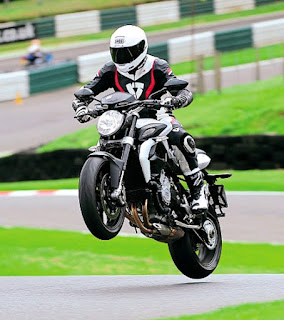
There are different ways to wheelie a motorcycle but the most common are the power wheelie (just open the throttle) and the clutch wheelie (dip the clutch momentarily). We teach the clutch method because it’s a lot more versatile – you can use it at different speeds and revs. Accelerate fairly hard then do a very shallow and fast clutch dip, letting the clutch back out immediately. The front wheel will come up smoothly.
Different bikes have different sweet spots when performing Wheelie, but as a rough guide for a 1000cc four-cylinder bike you should dip the clutch at 4000-5000 RPM. If it’s a revvy 600 it’ll be more like 8000 RPM, and a big V-twin will be 3000 RPM. You want to make the time that the clutch is in as tiny as you possibly can – even after practicing with engines off, 80% of the riders we teach struggle with this because they’re so used to pulling the clutch all the way in. That’s when an anti-flip device is very useful...
Without experts on hand, practice a wheelie in second gear to start with because first will feel a bit twitchy. Anything higher and you’re going too fast. If your bike isn’t powerful enough to bring it up in second, it doesn’t matter – you’re better off practicing timing the clutch dip, rather than frightening yourself in first gear. As soon as you start practicing Wheelie a Motorcycle, you must cover the back brake. At first you hopefully won’t need it to control the wheelie, because the front wheel won’t be going high enough to worry you. But it’s good to get used to having your foot in the right position. One of the most common crashes is when the front comes up fast, you brick it and take your feet off the footrests, before jumping off the back. It’s important that you try to stay nice and relaxed.
If your upper body is tense then your movements on the controls start to get notchy – after a while your arms will stop working properly and technique will disappear, and that’s when people get hurt. Sit as far back as you can, to use your weight to help the wheelie, but keep a bend in your arms. Hold the bike with your legs rather than your arms. People try to yank the bike up with their arms like it’s a pushbike, but all that does is mess up throttle and clutch control.
To maintain the wheelie you’re going to have to accelerate because you’re probably not at the balance point. The way to do that is with pulses, so when the front wheel starts to drop a bit, you wind on the throttle a fraction so the front bobs up and then you can wind the throttle off slightly. It’s a small movement – you can’t treat the throttle like an on/off switch.

3 Simple Tips on How to Wheelie a Motorcycle Safely
- Find Somewhere Quiet Wide and flat to practice How to Wheelie a Motorcycle. Ideally go to a reputable motorcycle wheelie school for your first attempts.
- Don't pull all the clutch all the way in, let the engine bounce off the limiter and then let the clutch out when performing Wheelie a Motorcycle You’ll end up sat on the road. To pop the front wheel up, dip the clutch for a fraction of a second as you accelerate.
- Cover the back brake whenever you try to wheelie a motorcycle and practice using it, even if your wheelies are low to start with. Your aim is to make using the back brake instinctive.
New 2011 Yamaha Introduces FZ8 and Fazer8


The naked FZ8 is designed to be a machine with attitude. Muscular, aggressive design gives onlookers a hint of this bike’s serious intentions. Yamaha says this is not a bike for beginners, the FZ8 is a pure expression of performance and quality craftsmanship.
With the semi-faired Fazer8, the emphasis is placed firmly on getting out there and enjoying the roads, whatever the weather. Discover sportsbike performance and handling, with the aerodynamics, wind and weather protection of a front cowl and screen. It’s a solid step up in performance and quality.Yamaha has finally released full specifications for its new middleweight street sportsbikes, the naked FZ8-N and semi-faired Fazer8. A 779cc engine derived from the FZ1 donk is the star of the show, with a complete FZ1 frame and swingarm as well. The new engine makes significantly more torque than the smaller FZ6 for a gruntier, more accessible power curve around town - but builds to a healthy 105-horsepower top end rush when it's time to get a boogie on. It looks like a fun, fast and friendly street sportsbike - and yes, FZ6 fans, it has formally replaced the 600 in the FZ lineup.
There is no perfect motorcycle, but nearly every modern motorcycle is astoundingly good. This wasn’t always the case with automobiles and motorcycles. I have a copy of a Car and Driver magazine from February of 1978. In it is a story by P.J. O’Rourke that chronicles his driving a 1956 Buick from Florida to California. He barely made it. The Buick had electrical issues, overheating issues, and a near terminal case of vapour lock. The Buick, at the time of the trip, was a 21-year-old car.
CHASSIS
Frame: Deltabox frame
Front suspension: Telescopic fork
Front wheel travel: 130mm
Rear suspension: Swingarm (link suspension)
Rear wheel travel: 130 mm
Caster angle: 25º
Trail: 109mm
Front brake: Hydraulic dual disc brake, Ø 310 mm
Rear brake: Hydraulic single disc brake, Ø 267 mm
Front tyre: 120/70 ZR17 M/C(58W)
Rear tyre: 180/55 ZR17 M/C(73W)
ENGINE
Type Liquid cooled 4-stroke,DOHC
Forward-inclined parallel 4-cylinder
Displacement 779cc
Bore x stroke 68.0×53.6mm
Compression ratio 12.0 : 1
Max. Power 78.1KW(106.2PS)/10000r/min
Max. Torque 82.0Nm(8.4kgf・m)/8000r/min
Lubrication system Wet sump
Fuel supply system Electronic Fuel Injection
Clutch type Wet, multiple-disc coil spring
Ignition system Transistorized coil ignition
Starter system Electric
Transmission system Constant mesh 6-speed
Final transmission system Chain
Primary reduction ratio 1.512(65/43)
Secondary reduction ratio 2.875(46/16)
Gear ratio 1st gear 2.692(35/13)
Gear ratio 2nd gear 2.063(33/16)
Gear ratio 3rd gear 1.762(37/21)
Gear ratio 4th gear 1.522(35/23)
Gear ratio 5th gear 1.350(27/20)
Gear ratio 6th gear 1.208(29/24)