Showing posts with label Motorcycle Riding Tips. Show all posts
Showing posts with label Motorcycle Riding Tips. Show all posts
Monday, November 30, 2015
Are My Knobbly Tyres Illegal ?
Here's a popular question about "Knobbly" Tyres : I was riding a road-legal off-road bike, along with a group of friends, on green lanes. I know we are not popular with the locals, who are unable to distinguish between us and illegal tearaways on motocross bikes. Our papers have stories every summer about crackdowns of "off-road motorcycle riders". My bike has an MoT, a road-legal exhaust and a registration number. It is taxed, and I wear a road-legal helmet. Sure enough, when my friends and I were pulled over by a particularly agitated police officer his computer check revealed that our bikes were all taxed, insured and ridden by their registered keepers.

But then a police sergeant turned up, who proceeded to give our bikes a roadside MoT. I was told that I will be prosecuted, along with a couple of my friends, for riding on the road with "knobbly" tyres. My bike hardly ever goes on the road. The only roadwork it does is between green lanes, usually on pretty badly beaten up country lanes liberally spread with gravel and a fair spread of cow and horse deposits.
Of our bikes, three of us had tyres marked "Not for road use" and a couple of the other lads were found to have tyre pressures that were below the recommended level for road use. We have all been summonsed to the local magistrates’ court, and we expect to get an unsympathetic hearing from the landed gentry, busybodies and bored ex-army officers who seem to make up the magistrates’ bench. I cannot see that I have done anything wrong. Should I expect to be convicted?
Answer
I Like to give straightforward answers to straightforward questions, but on this one I am struggling. Your summons is for the use of the tyre, contrary to regulation 27 (1) (a) of the 1986 Regulations. The prosecution has to prove that the “tyre is unsuitable having regard to the use to which the motor vehicle... is being put”. I ride a green-lane bike in an area where off-road riders, whether legal or not, are met with universal loathing. I understand the dilemma you are in.
I would be putting forward a defence that the Crown has failed to prove that the tyre is unsuitable for the particular use that you were putting it to – but going to court is my job, and you might not be so confident. As you said, your bike is used predominantly for riding on unmade roads, green lanes, mud and grass. Your tyres are entirely suitable for that type of terrain.
Honestly, I cannot tell you whether or not a local bench will find in your favour. The police do not make any allegations that you were riding fast or anything other than carefully, so riding slowly and sedately on tarmac on an off-road tyre does not strike me as an unsuitable use of the tyre.
Unluckily for you, the chances are pretty slim that you’ll get even one magistrate who understands the technical requirements of an off-road tyre, the fact that you’re putting your tyres through no strain while riding for short journeys on tarmac, and also that off-road tyres should be run at a lower tyre pressure (indeed there is law on this point – the tyres can be at a pressure that is suitable for the tyres’ use at the time [Conner v Graham 1981]), even if they go for short periods on tarmac. You must make sure you have expert evidence from somebody who can give it about tyres – or if that is impracticable or too expensive then published works, such as off-road riding guides, would at least raise reasonable doubt in the magistrates’ minds.
Keep your observations to the facts and do not become aggrieved or shouty – a presentational disaster. This may be the kind of case where professional representation would be money well spent. On your own, I think you will be in difficulty.

Sunday, November 29, 2015
How to Wheelie a Motorcycle Safely In 3 Simple Tips ?
How to Wheelie a Motorcycle Safely In 3 Simple Tips ? The safest way to learn is to go to a reputable motorcycle wheelie school. At ours, all the bikes have anti-flip devices to stop you going over backwards and you’re taught on an airfield so there are no cars or hedges to worry about. However, if you’re determined to go it alone, there’s a safe and quick way to learn.
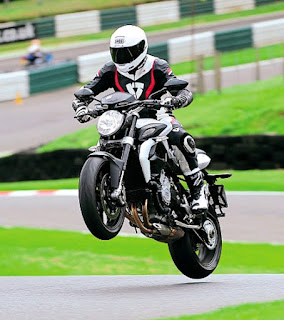
There are different ways to wheelie a motorcycle but the most common are the power wheelie (just open the throttle) and the clutch wheelie (dip the clutch momentarily). We teach the clutch method because it’s a lot more versatile – you can use it at different speeds and revs. Accelerate fairly hard then do a very shallow and fast clutch dip, letting the clutch back out immediately. The front wheel will come up smoothly.
Different bikes have different sweet spots when performing Wheelie, but as a rough guide for a 1000cc four-cylinder bike you should dip the clutch at 4000-5000 RPM. If it’s a revvy 600 it’ll be more like 8000 RPM, and a big V-twin will be 3000 RPM. You want to make the time that the clutch is in as tiny as you possibly can – even after practicing with engines off, 80% of the riders we teach struggle with this because they’re so used to pulling the clutch all the way in. That’s when an anti-flip device is very useful...
Without experts on hand, practice a wheelie in second gear to start with because first will feel a bit twitchy. Anything higher and you’re going too fast. If your bike isn’t powerful enough to bring it up in second, it doesn’t matter – you’re better off practicing timing the clutch dip, rather than frightening yourself in first gear. As soon as you start practicing Wheelie a Motorcycle, you must cover the back brake. At first you hopefully won’t need it to control the wheelie, because the front wheel won’t be going high enough to worry you. But it’s good to get used to having your foot in the right position. One of the most common crashes is when the front comes up fast, you brick it and take your feet off the footrests, before jumping off the back. It’s important that you try to stay nice and relaxed.
If your upper body is tense then your movements on the controls start to get notchy – after a while your arms will stop working properly and technique will disappear, and that’s when people get hurt. Sit as far back as you can, to use your weight to help the wheelie, but keep a bend in your arms. Hold the bike with your legs rather than your arms. People try to yank the bike up with their arms like it’s a pushbike, but all that does is mess up throttle and clutch control.
To maintain the wheelie you’re going to have to accelerate because you’re probably not at the balance point. The way to do that is with pulses, so when the front wheel starts to drop a bit, you wind on the throttle a fraction so the front bobs up and then you can wind the throttle off slightly. It’s a small movement – you can’t treat the throttle like an on/off switch.

3 Simple Tips on How to Wheelie a Motorcycle Safely
- Find Somewhere Quiet Wide and flat to practice How to Wheelie a Motorcycle. Ideally go to a reputable motorcycle wheelie school for your first attempts.
- Don't pull all the clutch all the way in, let the engine bounce off the limiter and then let the clutch out when performing Wheelie a Motorcycle You’ll end up sat on the road. To pop the front wheel up, dip the clutch for a fraction of a second as you accelerate.
- Cover the back brake whenever you try to wheelie a motorcycle and practice using it, even if your wheelies are low to start with. Your aim is to make using the back brake instinctive.
Monday, November 16, 2015
How to Raise a Fallen Motorcycle
Once you’ve determined you’re all right at the Emergency Situations, you need to turn your attention to your fallen bike. If you’re lucky, it will be safe to ride. But be careful, because incorrectly raising even a small bike can injure your back. You’ve just survived a wipeout : wouldn’t it be embarrassing to injure yourself when you pick up your bike ?

If possible, find someone to help you lift the bike. If you have to lift it by yourself, there are procedures to help prevent you from injuring your back.
When picking up your bike, use leverage to avoid straining your back. If the bike has case guards (metal tubes mounted around the engine to protect the engine cases in a crash), grab the handlebars and roll the bike toward you on the case guards, using the bike’s momentum to get it upright. Bend your knees and use your legs, not your back, to lift the machine upright.
If the bike doesn’t have case guards, grasp the lower side of the handlebar (the side under the bike), turn the front wheel toward you, grasp some solid part of the frame, and work your knee under the seat. Then, use your legs to lift the bike. You might want to extend your side stand, in case you get the bike upright and it falls over in the opposite direction.
Don’t smoke anywhere near the fallen bike, since gas will most likely have dripped out. There may also be battery acid that has dripped out. This can burn holes in your riding gear and even your skin, as well as corrode metal parts on your bike. You’ll want to check the level of the fluid in your battery after a fall.
Once you’ve gotten the bike upright, check for other damage, too. Brake, clutch, and shift levers can get bent or broken in a fall. Riding a bike with a broken clutch or brake lever is difficult and dangerous. You may be in a situation where you have to ride away from your crash site with a broken or bent lever, but replace it as soon as possible.
Also check your wheels and tires after a crash. Make certain that a fender or chain guard isn’t rubbing on your tire. Make certain that your handlebars are firmly attached to your fork. If your handlebars break loose, you’re going to crash again. In the majority of all emergency situations, the only thing that will be hurt is your pride. Swallow it and count your blessings.
Once you have calmed down, reconstruct the events leading up to your crash. Chances are, in retrospect, you will remember ways you could have avoided the accident entirely. Remember these things the next time you ride, and you will greatly decrease your odds of ever crashing again.
Read more »

If possible, find someone to help you lift the bike. If you have to lift it by yourself, there are procedures to help prevent you from injuring your back.
When picking up your bike, use leverage to avoid straining your back. If the bike has case guards (metal tubes mounted around the engine to protect the engine cases in a crash), grab the handlebars and roll the bike toward you on the case guards, using the bike’s momentum to get it upright. Bend your knees and use your legs, not your back, to lift the machine upright.
If the bike doesn’t have case guards, grasp the lower side of the handlebar (the side under the bike), turn the front wheel toward you, grasp some solid part of the frame, and work your knee under the seat. Then, use your legs to lift the bike. You might want to extend your side stand, in case you get the bike upright and it falls over in the opposite direction.
Don’t smoke anywhere near the fallen bike, since gas will most likely have dripped out. There may also be battery acid that has dripped out. This can burn holes in your riding gear and even your skin, as well as corrode metal parts on your bike. You’ll want to check the level of the fluid in your battery after a fall.
Once you’ve gotten the bike upright, check for other damage, too. Brake, clutch, and shift levers can get bent or broken in a fall. Riding a bike with a broken clutch or brake lever is difficult and dangerous. You may be in a situation where you have to ride away from your crash site with a broken or bent lever, but replace it as soon as possible.
Also check your wheels and tires after a crash. Make certain that a fender or chain guard isn’t rubbing on your tire. Make certain that your handlebars are firmly attached to your fork. If your handlebars break loose, you’re going to crash again. In the majority of all emergency situations, the only thing that will be hurt is your pride. Swallow it and count your blessings.
Once you have calmed down, reconstruct the events leading up to your crash. Chances are, in retrospect, you will remember ways you could have avoided the accident entirely. Remember these things the next time you ride, and you will greatly decrease your odds of ever crashing again.
Sunday, November 15, 2015
5 Things You Must Bring On A Motorcycle Trip !
Ever since I started riding motorcycles, I’ve felt a powerful desire to explore new places on a bike. As soon as I was old enough to get my motorcycle endorsement, I began taking serious motorcycle tours.
I enjoy all aspects of riding, from commuting to work to trail riding, but I enjoy touring on a bike most of all. I find nothing more thrilling than cresting a hill and seeing a new expanse of world open up before me. Whether I’m exploring the Sand Hill region of Nebraska, the High Desert in Southern California, the lush Ozark Mountains of Arkansas, or the wheat fields of Minnesota, I never get bored when I’m traveling on a bike.

No matter what I tell you, you will probably overestimate the amount of clothing and gear you’ll need when you take your first motorcycle trip. But here are my 5 suggestions for all you need for a safe, comfortable ride.
On my first extended trip, which I took about 15 years ago, I brought a couple of different jackets (for riding in a variety of weather conditions), along with five or six complete changes of clothing, including some dressy clothes in case I wanted to go out to eat or on a date.
Now I bring a couple of pairs of jeans, a couple of turtlenecks, a couple of sweat shirts, and a couple of T-shirts. I may bring three T-shirts if the weather is hot, or if I plan to be gone a week or more. And I bring pretty much every pair of underwear and socks I own. If I go out for a nice dinner, I wear my cleanest pair of jeans and the turtleneck with the fewest holes in it.
Your best bet is to travel light on a bike. Only bring clothing you’ll wear. And you’ll always seem to wear less than you bring. As you become a more experienced motorcycle traveler, you’ll find that you bring less clothing on each successive trip.
Although I pack less clothes for each successive trip, I find that my list of must-bring gear grows each year. Every time I’ve needed an item I didn’t have, I’ve included that item on following trips.
I always bring a small selection of extra tools, even when I’m on a new bike. The toolkits that come with most bikes will do in a pinch, but I always like to have an extra set of combination spanner wrenches, a couple of pliers (needle-nose pliers and channel-lock pliers), a ratchet, and a small selection of sockets. I also include a cigarette lighter, a small selection of nuts and bolts (including some for connecting my battery cables to my battery), some electrical connectors, a roll of wire, and a couple of rolls of tape (friction and duct tape).
I also carry a first-aid kit with me. I make certain that kit includes :
- A selection of bandages, including gauze bandages
- Adhesive tape
- An antibiotic of some sort
- Something for bee stings
This is a list of the absolute minimum amount of items a first-aid kit should include. If you can pack a more complete kit, you should do so, even if you need to leave something else behind to make room for it.
I’m a photographer and always bring my camera equipment when I travel, which presents some challenges on a bike. The greatest of these challenges is weather protection. If you have watertight hard luggage, this is not as much of an issue, but riders with soft luggage will have to come up with a way to keep the rain off their camera equipment. Before a trip on which I’ll be using soft luggage, I buy a box of the most durable garbage bags I can get (the kind for bagging leaves seems to be the toughest), then double-wrap my mirrorless cameras in these bags.
When your camera is packed away in your luggage, it can take too long to reach it, so I have a fanny-pack–type camera bag. If you want to keep your camera ready to use when you ride, I highly recommend this type of bag. Another option is to use small point-and-shoot cameras when you travel. You can keep these in your vest pockets or fairing pockets, where they’ll stay dry and be ready when you need them.
If you pack your camera in your luggage, whether you have soft or hard luggage, be careful not to place it in a location where it will bounce around. Just the vibration from your bike can pound expensive cameras to pieces ; if they bounce around in your trunk or against your shock absorbers while in your saddlebags, you could end up with very expensive paperweights instead of cameras.
Carrying your camera in a fanny pack, or carrying a point-and-shoot camera in your vest pocket, can eliminate much of this problem. If you transport your camera in your luggage, pack soft items, such as towels, clothing, or pillows, around it to absorb shocks and vibrations.
I always wear a full-face helmet with a visor when traveling. Not only does a full-face helmet provide superior protection in an accident, it provides superior protection from the elements and superior comfort.
The most versatile piece of protective gear you can own is a waterproof riding suit like Alpinestars Durban Gore-Tex Jacket (mentioned in : How to Choose Your Best Extreme Riding Gear !). These suits eliminate the need for rain gear, freeing up a lot of luggage space, and they provide unmatched versatility. With all liners in place, such suits provide excellent cold-weather protection, yet with the liners removed and with all vents opened, they are the best hot-weather gear you can buy. This is especially important when traveling in high mountains, where temperatures can vary by 60 or 70 degrees in just a few miles.
Read more »
I enjoy all aspects of riding, from commuting to work to trail riding, but I enjoy touring on a bike most of all. I find nothing more thrilling than cresting a hill and seeing a new expanse of world open up before me. Whether I’m exploring the Sand Hill region of Nebraska, the High Desert in Southern California, the lush Ozark Mountains of Arkansas, or the wheat fields of Minnesota, I never get bored when I’m traveling on a bike.

No matter what I tell you, you will probably overestimate the amount of clothing and gear you’ll need when you take your first motorcycle trip. But here are my 5 suggestions for all you need for a safe, comfortable ride.
The Clothes Make the Motorcyclist
On my first extended trip, which I took about 15 years ago, I brought a couple of different jackets (for riding in a variety of weather conditions), along with five or six complete changes of clothing, including some dressy clothes in case I wanted to go out to eat or on a date.
Now I bring a couple of pairs of jeans, a couple of turtlenecks, a couple of sweat shirts, and a couple of T-shirts. I may bring three T-shirts if the weather is hot, or if I plan to be gone a week or more. And I bring pretty much every pair of underwear and socks I own. If I go out for a nice dinner, I wear my cleanest pair of jeans and the turtleneck with the fewest holes in it.
When packing for a motorcycle trip, pack light. A lighter load will tax your motorcycle less and not have such a pronounced effect on your bike’s handling. Leave a little extra space for any souvenirs you might pick up.
Your best bet is to travel light on a bike. Only bring clothing you’ll wear. And you’ll always seem to wear less than you bring. As you become a more experienced motorcycle traveler, you’ll find that you bring less clothing on each successive trip.
Tools You’ll Use
Although I pack less clothes for each successive trip, I find that my list of must-bring gear grows each year. Every time I’ve needed an item I didn’t have, I’ve included that item on following trips.
I always bring a small selection of extra tools, even when I’m on a new bike. The toolkits that come with most bikes will do in a pinch, but I always like to have an extra set of combination spanner wrenches, a couple of pliers (needle-nose pliers and channel-lock pliers), a ratchet, and a small selection of sockets. I also include a cigarette lighter, a small selection of nuts and bolts (including some for connecting my battery cables to my battery), some electrical connectors, a roll of wire, and a couple of rolls of tape (friction and duct tape).
Safety First: First Aid
I also carry a first-aid kit with me. I make certain that kit includes :
- A selection of bandages, including gauze bandages
- Adhesive tape
- An antibiotic of some sort
- Something for bee stings
This is a list of the absolute minimum amount of items a first-aid kit should include. If you can pack a more complete kit, you should do so, even if you need to leave something else behind to make room for it.
For the Scenic Routes : Photographic Equipment
I’m a photographer and always bring my camera equipment when I travel, which presents some challenges on a bike. The greatest of these challenges is weather protection. If you have watertight hard luggage, this is not as much of an issue, but riders with soft luggage will have to come up with a way to keep the rain off their camera equipment. Before a trip on which I’ll be using soft luggage, I buy a box of the most durable garbage bags I can get (the kind for bagging leaves seems to be the toughest), then double-wrap my mirrorless cameras in these bags.
When your camera is packed away in your luggage, it can take too long to reach it, so I have a fanny-pack–type camera bag. If you want to keep your camera ready to use when you ride, I highly recommend this type of bag. Another option is to use small point-and-shoot cameras when you travel. You can keep these in your vest pockets or fairing pockets, where they’ll stay dry and be ready when you need them.
If you pack your camera in your luggage, whether you have soft or hard luggage, be careful not to place it in a location where it will bounce around. Just the vibration from your bike can pound expensive cameras to pieces ; if they bounce around in your trunk or against your shock absorbers while in your saddlebags, you could end up with very expensive paperweights instead of cameras.
Always buy a large box of heavy duty garbage bags before going on a motorcycle trip. You’ll be amazed at the uses you’ll find for them. I place my clothes in them, then put the garbage bag in my saddlebags. Not only does this protect my clothes from getting wet, but it makes it easier to pack and unpack my saddlebags. I also wrap my sleeping bag in garbage bags. If you’ve ever had to spend a night in a wet sleeping bag, you’ll see the value of this practice.
Carrying your camera in a fanny pack, or carrying a point-and-shoot camera in your vest pocket, can eliminate much of this problem. If you transport your camera in your luggage, pack soft items, such as towels, clothing, or pillows, around it to absorb shocks and vibrations.
Protective Gear
I always wear a full-face helmet with a visor when traveling. Not only does a full-face helmet provide superior protection in an accident, it provides superior protection from the elements and superior comfort.
The most versatile piece of protective gear you can own is a waterproof riding suit like Alpinestars Durban Gore-Tex Jacket (mentioned in : How to Choose Your Best Extreme Riding Gear !). These suits eliminate the need for rain gear, freeing up a lot of luggage space, and they provide unmatched versatility. With all liners in place, such suits provide excellent cold-weather protection, yet with the liners removed and with all vents opened, they are the best hot-weather gear you can buy. This is especially important when traveling in high mountains, where temperatures can vary by 60 or 70 degrees in just a few miles.
Make certain that your load is secure when packing a bike for a trip. If something falls off, it could get caught in your wheel or chain, causing you to lose traction and crash.
Saturday, November 14, 2015
Emergency Situations : What Bikers Must Know
Nobody is perfect. Ride long enough, and you will go down, regardless of how careful you are, how diligent you are, or how skilled you are. Even if you always ride within your ability, not everything is under your control.
The types of emergency situations you can encounter are infinite, but they can be classified into two general categories: losing traction, and hitting something or having something hit you.

The most common and usually least consequential emergency you will encounter is losing traction and falling down.
Remember, don’t panic. If you remain calm and use smooth throttle control, you can often regain control after you have lost traction. If your back tire starts to slide, don’t drop the throttle. When you suddenly quit supplying power to the back tire, it violently regains traction, jerking your motorcycle in the opposite direction. Your best bet is to ride the slide through.
If it’s too late, and you know you’re going down, just relax, let go of the bike, and ride it out. If you’re wearing your protective gear - and you should always be wearing your gear - chances are you’re going to be okay. Try to slide on your back. Keep your arms and legs stretched out, and try not to let them dig into the ground, which can cause you to flip through the air. Stay relaxed. Stay low to the ground, and try to move away from the motorcycle. Don’t stand up until you’re sure you’ve stopped.
If you strike a small object, it is possible to prevent yourself from crashing by following the proper technique.
If you find yourself in the position of being unable to avoid a small object or piece of debris, don’t slam on the front brake. This will cause your motorcycle to pitch forward, forcing your front tire into the object rather than over it. It will also cause your front tire to lock up, and if ever you needed traction from your front tire, now is the time.
Try to hit the object as straight on as possible. Apply a bit of throttle to take some weight off the front tire, and as you strike the object, pull back on the handlebars. If you remain calm, you can ride over the object without crashing.
Being struck by another vehicle is probably the most serious type of accident you can have, followed by you striking another vehicle. Both situations are extremely dangerous, but if you strike another vehicle, at least you have a split second to react. When you are struck by another vehicle, you usually don’t know what hit you.
The only way to deal with such situations is to avoid them - remember to be aware of your complete surroundings, and above all, ride at a speed slow enough to allow you time to react.
If you do have a crash, you need to remain calm. If you are still on the road, you need to move off the road, if at all possible. No matter how badly you’re hurt, you will be hurt worse if you stay in traffic. Once you’re out of harm’s way, you need to take stock of your injuries, particularly to your spine. Check to see if you can move your fingers. Don’t move any more than necessary until you’re absolutely
certain you haven’t damaged your spine.
Above all, don’t remove your helmet until you have made certain that you have no spinal damage, since that can cause even worse damage. Even if you have damaged your spine, you may be okay and suffer no paralysis if you don’t further damage your spinal column.
If you are able to walk away from a crash, you can treat it like an automobile accident : exchange insurance information if other drivers are involved and remove your motorcycle from the roadway, if it is safe to do so. If there is any chance of spinal injury, all you can do is wait for help.
Read more »
The types of emergency situations you can encounter are infinite, but they can be classified into two general categories: losing traction, and hitting something or having something hit you.

You’ll often hear people say that most accidents happen within the first six miles of putting your kickstand up. This may be a researched fact, or it may be an old wive’s tale, but there is a certain amount of logic behind the theory. Often when you first get on your bike, your mind is not completely engaged in the business of riding. You may be wondering if you put your change in your wallet at the fast food restaurant you just visited, or you may be thinking about work. Sometimes it just takes a few miles to get into a groove. Whether or not the six-mile rule has a basis in fact, thinking about it as a fact is likely to help you avoid having an accident in the first six miles because you may be more careful when you first get on your bike.
Losing Traction
The most common and usually least consequential emergency you will encounter is losing traction and falling down.
Remember, don’t panic. If you remain calm and use smooth throttle control, you can often regain control after you have lost traction. If your back tire starts to slide, don’t drop the throttle. When you suddenly quit supplying power to the back tire, it violently regains traction, jerking your motorcycle in the opposite direction. Your best bet is to ride the slide through.
If it’s too late, and you know you’re going down, just relax, let go of the bike, and ride it out. If you’re wearing your protective gear - and you should always be wearing your gear - chances are you’re going to be okay. Try to slide on your back. Keep your arms and legs stretched out, and try not to let them dig into the ground, which can cause you to flip through the air. Stay relaxed. Stay low to the ground, and try to move away from the motorcycle. Don’t stand up until you’re sure you’ve stopped.
Hitting or Being Hit
If you strike a small object, it is possible to prevent yourself from crashing by following the proper technique.
If you find yourself in the position of being unable to avoid a small object or piece of debris, don’t slam on the front brake. This will cause your motorcycle to pitch forward, forcing your front tire into the object rather than over it. It will also cause your front tire to lock up, and if ever you needed traction from your front tire, now is the time.
Many motorcyclists learn how to crash by riding dirtbikes. You are much more likely to wipe out on the rough surfaces found offroad than you are on smooth pavement, so dirtbikers crash much more often than streetbikers. Learning how to react in a crash is probably the most important off-road skill that transfers to the street.
Try to hit the object as straight on as possible. Apply a bit of throttle to take some weight off the front tire, and as you strike the object, pull back on the handlebars. If you remain calm, you can ride over the object without crashing.
Being struck by another vehicle is probably the most serious type of accident you can have, followed by you striking another vehicle. Both situations are extremely dangerous, but if you strike another vehicle, at least you have a split second to react. When you are struck by another vehicle, you usually don’t know what hit you.
The only way to deal with such situations is to avoid them - remember to be aware of your complete surroundings, and above all, ride at a speed slow enough to allow you time to react.
What to Do After an Emergency
Always carry a first-aid kit on your bike. A first-aid kit is something you hope to never need, but if you do, you’ll be glad you have it. At the very least, your first-aid kit should have bandages, tape, something for bee stings, and some form of antibiotic ointment. In an emergency situation, a cellular phone can be the most critical piece of first-aid equipment you can carry.
If you do have a crash, you need to remain calm. If you are still on the road, you need to move off the road, if at all possible. No matter how badly you’re hurt, you will be hurt worse if you stay in traffic. Once you’re out of harm’s way, you need to take stock of your injuries, particularly to your spine. Check to see if you can move your fingers. Don’t move any more than necessary until you’re absolutely
certain you haven’t damaged your spine.
Above all, don’t remove your helmet until you have made certain that you have no spinal damage, since that can cause even worse damage. Even if you have damaged your spine, you may be okay and suffer no paralysis if you don’t further damage your spinal column.
If you are able to walk away from a crash, you can treat it like an automobile accident : exchange insurance information if other drivers are involved and remove your motorcycle from the roadway, if it is safe to do so. If there is any chance of spinal injury, all you can do is wait for help.
Riding Through Special Situations : Group Riding !
Motorcyclists tend to be social creatures, and as such, tend to ride in groups. For many people, riding with friends is the most enjoyable aspect of motorcycling. Sometimes it’s fun to ride in a large group of bikes just to see the looks on people’s faces as you ride by. You may be accountants or lawyers or paramedics, but when you pull into a gas station with a large group of motorcycles, some people act like the Hell’s Angels just came to town, which in a twisted way, is kind of fun.

Going out for a ride with your friends can be a blast, but it will require extra effort on your part to do it safely. You’ll be riding with people whose riding skills vary, along with their temperaments.
When riding in a group, you can ride in one of three formations :
1. Staggered formation. In this formation, the motorcycles line up on both sides of the lane, with one bike on the left side, the next bike on the right side, the following bike back on the left side, and so on, with each bike maintaining a two second interval between the next bike. This formation keeps the group close together while maintaining the maximum amount of safe space around each bike.
2. Single-file formation. When you are out riding with your friends on a winding road, you will all need to use your entire lane to safely negotiate each corner. On such roads, ride in a single-file formation. Remember not to follow each other too closely, or if one person goes down, he or she might take down other riders, too.
3. Side-by-side formation. When bikes ride side-by-side, they reduce the amount of safe space between each bike, so this type of formation should be discouraged. Sometimes, an escort may require you to ride in such a formation to make the group as compact as possible, but otherwise, avoid riding two-motorcycles abreast.
When riding with your friends, watch out for group mentality taking over. This is when everyone tries to out ride everyone else. Many otherwise sane riders crash when group mentality takes over.
When riding in a group, ride for yourself and no one else. Be aware of who you’re riding with, where they are, and how fast they’re going. Above all, don’t ride above your own ability. It’s a lot more embarrassing to go down in front of your friends than it is to arrive a few seconds later than they do.
Read more »

Going out for a ride with your friends can be a blast, but it will require extra effort on your part to do it safely. You’ll be riding with people whose riding skills vary, along with their temperaments.
Group Riding Techniques
When riding in a group, you can ride in one of three formations :
1. Staggered formation. In this formation, the motorcycles line up on both sides of the lane, with one bike on the left side, the next bike on the right side, the following bike back on the left side, and so on, with each bike maintaining a two second interval between the next bike. This formation keeps the group close together while maintaining the maximum amount of safe space around each bike.
2. Single-file formation. When you are out riding with your friends on a winding road, you will all need to use your entire lane to safely negotiate each corner. On such roads, ride in a single-file formation. Remember not to follow each other too closely, or if one person goes down, he or she might take down other riders, too.
3. Side-by-side formation. When bikes ride side-by-side, they reduce the amount of safe space between each bike, so this type of formation should be discouraged. Sometimes, an escort may require you to ride in such a formation to make the group as compact as possible, but otherwise, avoid riding two-motorcycles abreast.
Sure, They’re Your Buddies, but Can You Trust Them with Your Life ?
When riding with your friends, watch out for group mentality taking over. This is when everyone tries to out ride everyone else. Many otherwise sane riders crash when group mentality takes over.
When riding with other people, let your ability determine your speed - not theirs. I’ve got a friend, a motorcycle-safety instructor, who can ride circles around me, regardless of what kind of bike either of us is riding. When we go out, I just let him go and catch up with him later. If I try to keep up, I’ll go down. I’ve seen it happen to other riders.
When riding in a group, ride for yourself and no one else. Be aware of who you’re riding with, where they are, and how fast they’re going. Above all, don’t ride above your own ability. It’s a lot more embarrassing to go down in front of your friends than it is to arrive a few seconds later than they do.
Thursday, November 12, 2015
How to Shift Gears Smoothly ?
Perform Downshifting
Downshifting smoothly, especially while braking hard, requires skill and dexterity. To avoid upsetting the bike, the engine rpm in the new gear must be matched to the road speed before the clutch is engaged, otherwise the rear tire will "chatter" momentarily and upset the bike as the engine rpm is forced to match road speed.

To do this, the rider must "blip" the throttle to raise the engine rpm during downshifts... but he must do this while simultaneously pulling on the front brake to slow down. While this riding skill is obviously necessary on the racetrack, it can also pay big dividends in street-riding situations where riding smoothly is a must; for instance, any situation where you are braking on a slippery surface.
The idea of blipping the throttle during downshifts can be intimidating initially, but with a little practice, the technique will soon become second nature.
First, make sure that your levers are adjusted as described in This Article. Check that your throttle is adjusted for minimal play in the cable. With the engine running in neutral, try blipping the throttle slightly while pulling firmly on the brake lever. Note that it doesn't take much throttle movement to get the revs up with no load on the engine. Then practice simultaneously pulling and releasing the clutch quickly when you blip the throttle (remembering to continue pulling on the brake lever as if you were slowing for a turn). Some people only use two fingers on the brake lever, others all four. Don’t be afraid to experiment and find out what works for you.
Next practice this technique while riding in a safe area with no traffic hazards. As you brake and begin your downshift, simply use the same method as before, but add the act of downshifting. The action of blipping the throttle and the downshift should be simultaneous and quick. It doesn't take a whole lot of extra revs to match the engine to road speed, so all it will require is a slight throttle blip.
With practice, you'll know just how much is necessary at various speeds. Note that mostly the palm of your hand and thumb that perform the act of moving the throttle. Your upper body weight is centered on your palms under braking anyway, and your fingers are busy actuating the brake and holding the bar. All it takes is a slight wrist movement to blip the throttle. You'll find this will help avoid affecting your braking action or steering.
If you find that you still have problems with this technique, try adjusting your brake so that your fingers are less stretched out (without hindering your ability to pull the lever in for maximum braking, of course).
If you continue to have trouble, you will have to employ the "non-blip" method even some racers such as Eric Bostrom use. This simply means the clutch is released gradually after the downshift so that the engine rpm can rise progressively to match road speed without the rear wheel chattering. The downside is that the rider must allow for some extra engine braking as the clutch is engaged, limiting if there is little load left on the rear tire as a result of weight transfer. Also, it requires even more skill at manipulating and controlling the bike while simultaneously releasing the clutch lever slowly and gradually.
Perform Upshifting
Although it is the right way for beginners or novice riders, using the clutch for upshifts is totally unnecessary. In fact, there are many riding situations where it can be a nuisance and even a hindrance to quicker and smoother riding.
Beware!
It is possible that your bike may have some shift or transmission issues that prevent using this technique. If so, see what aftermarket accessories are available. A motorcycle’s gearbox differs from your typical automobile manual transmission in that it can actually change gears under a small load, and only needs a slight interruption in the flow of power to accomplish an upshift. Its constantmesh, sequential dog-engagement design means it can change gears much more readily than a typical automobile synchromesh transmission.
This is why "power shifters" are so popular with motorcycle racers; by using a device that cuts ignition momentarily while upshifting, the rider is able to keep the throttle pinned wide open, saving time and effort.
Basically, clutchless upshifting is simple: Instead of shutting off the throttle completely and pulling in the clutch while you shift, just let off the throttle some and perform the upshift in a quick, near-simultaneous movement; ignore the clutch. Don’t shut the throttle off completely, just let off enough to get the shift done. Upshifting without the clutch also gets you in the habit of performing the shift quickly and smoothly.
This minimises the effect of weight transfer from letting off the throttle so as not to upset the bike’s handling. Once you become accustomed to using this technique, you’ll be amazed at the time and energy saved (and you’ll probably reduce wear and tear on your clutch plates, too).
There are riding situations where the physical exertion saved from not having to constantly squeeze the clutch lever during upshifts can be a huge benefit. For example, accelerating through a series of turns your arms and hands are busy steering the bike, so it’s quicker and smoother to do without the clutch.
Wednesday, November 11, 2015
Riding Through Special Situations : Two for the Road !
Part of the fun of motorcycling is sharing it with another person (or riding two up). Bringing a passenger along can make the experience of riding more rewarding, but it also requires extra care on your part.
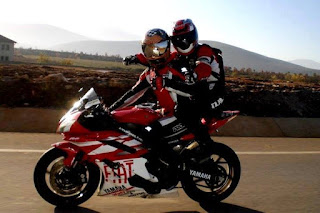
Adding a passenger changes the weight distribution on your bike, which in turn changes the handling dynamics. The bike will turn differently with a passenger on board and will need more distance to stop. You can compensate for this somewhat by adjusting your suspension and increasing the air pressure of your tires. Suspension adjustments vary from bike to bike, but most modern motorcycles at least have a preload adjustment on the rear shocks that you can adjust to a firmer setting for carrying a passenger. Again, consult your owner’s manual for the exact procedure for your bike.
Before riding with a passenger, go over some rules of the road with him or her. Explain the following concepts :
- The passenger should not get on the bike until you have it off the stand and secure in an upright position.
- The passenger should hold onto you by the waist or hips while riding. Some riders may prefer to grasp the passenger’s hand rail (on bikes so equipped), but I always feel more secure when the passenger grasps my waist or hips.
- The passenger should keep his or her feet on the footpegs at all times, even while the bike is stopped.
- The passenger should keep his or her feet away from all hot parts, especially the exhaust pipes.
- The passenger must sit behind you on the passenger portion of the seat. If there is no passenger seat, there should be no passenger. And never seat a child on the gas tank in front of you. Also, the maximum capacity of a bike is two people. Never attempt to give a ride to more than one person.
While giving someone a ride, have him or her relax and lean with you, or else remain upright. Whatever they do, they shouldn’t stiffen up and lean away from a turn. This greatly reduces your ability to negotiate a corner.
Above all, don’t try to impress your passenger with your riding ability. I once came upon an accident scene where a kid and his date wiped out in a corner on their way to a frat-house formal. The young man had tried to negotiate a curve too fast. Both victims wore evening party clothing instead of protective gear, and neither had a helmet. The bike was totaled, but neither the rider nor the passenger was seriously hurt.
They were a mess, though, with their expensive clothes shredded to bits, and both had numerous cuts and bruises. He was embarrassed, and she was furious. Being a passenger on a motorcycle is exciting enough, and nothing will impress your passenger more than a safe, smooth ride.
Read more »

Adding a passenger changes the weight distribution on your bike, which in turn changes the handling dynamics. The bike will turn differently with a passenger on board and will need more distance to stop. You can compensate for this somewhat by adjusting your suspension and increasing the air pressure of your tires. Suspension adjustments vary from bike to bike, but most modern motorcycles at least have a preload adjustment on the rear shocks that you can adjust to a firmer setting for carrying a passenger. Again, consult your owner’s manual for the exact procedure for your bike.
Always go over the rules with your passenger before riding. The other person may not be aware of things that seem obvious to you. Once, I gave a ride to a stranded motorist on the back of a sport-touring bike. I helped the young man put my spare helmet on and gave him an extra pair of gloves I had in my saddlebag, then took him to the nearest gas station for help. I thought I’d done a good job preparing the kid, but after I dropped him off, my wife, who followed on her motorcycle, said he’d ridden the entire way with his feet sticking out in the air - I’d forgotten to tell him to put his feet on the footpegs.
Before riding with a passenger, go over some rules of the road with him or her. Explain the following concepts :
- The passenger should not get on the bike until you have it off the stand and secure in an upright position.
- The passenger should hold onto you by the waist or hips while riding. Some riders may prefer to grasp the passenger’s hand rail (on bikes so equipped), but I always feel more secure when the passenger grasps my waist or hips.
- The passenger should keep his or her feet on the footpegs at all times, even while the bike is stopped.
- The passenger should keep his or her feet away from all hot parts, especially the exhaust pipes.
- The passenger must sit behind you on the passenger portion of the seat. If there is no passenger seat, there should be no passenger. And never seat a child on the gas tank in front of you. Also, the maximum capacity of a bike is two people. Never attempt to give a ride to more than one person.
While giving someone a ride, have him or her relax and lean with you, or else remain upright. Whatever they do, they shouldn’t stiffen up and lean away from a turn. This greatly reduces your ability to negotiate a corner.
Above all, don’t try to impress your passenger with your riding ability. I once came upon an accident scene where a kid and his date wiped out in a corner on their way to a frat-house formal. The young man had tried to negotiate a curve too fast. Both victims wore evening party clothing instead of protective gear, and neither had a helmet. The bike was totaled, but neither the rider nor the passenger was seriously hurt.
They were a mess, though, with their expensive clothes shredded to bits, and both had numerous cuts and bruises. He was embarrassed, and she was furious. Being a passenger on a motorcycle is exciting enough, and nothing will impress your passenger more than a safe, smooth ride.
Riding Through Special Situations : Night Rider !
Reduced visibility is your primary challenge when riding at night. And at night, there are even more dangers you need to see than during the day, since many animals roam around at night. Plus, a higher percentage of other drivers are drunk at night than during the day. This is especially true on the weekends.

One of my closest calls involved a suicidal raccoon in the middle of the night. I was giving a girl a ride and showing off a bit, when a raccoon trundled out in front of my bike. I was going much too fast to stop or even swerve around the animal, so relying on my dirtbike experience, I gave the bike extra throttle, aimed the bike straight at the raccoon, and pulled back on my handlebars.
I wheelied over the poor critter, became airborne, then landed perfectly, without upsetting the chassis. Even though I handled the situation effectively, my riding partner was not too impressed. She never rode with me again.
After I reached the point of no return, I did some things right in that situation, but if I’d been practicing proper night-riding techniques, I wouldn’t have gotten into the situation in the first place. Here’s what I did wrong :
1. I rode too fast. When riding at night, always slow down !
2. I rode out of my headlights. The lights on a motorcycle only illuminate a small part of the road, making obstacles and debris invisible. If you can’t see a hazard, you can’t avoid it. When you do see an obstacle, you have much less time to avoid it than you do during daylight hours. Adjust your speed so that you are able to stop or swerve as soon as you spot any potentially dangerous situation.
Motorcycle headlights are improving, but they still don’t illuminate the road like the headlights on a car. Adding additional driving lights can help increase your field of vision.
To get the maximum visibility from your headlight, you need to make certain that it’s properly adjusted. The high beam should touch the road at its maximum range, yet the low beam should be below the eye level of approaching motorists. The procedure for adjusting the headlight varies from bike to bike. Consult your owner’s manual to find the procedure for your particular bike.
When riding at night, learn to read the headlights of the car in front of you. You may be able to follow another vehicle (remembering to allow even more space between you and that vehicle than you do during daylight hours) and use its headlights to help increase your field of vision. If the headlights of the vehicle ahead bounce, you can expect a bump in the road. If the vehicle swerves, the driver may be trying to avoid something, like an animal.
Read more »

One of my closest calls involved a suicidal raccoon in the middle of the night. I was giving a girl a ride and showing off a bit, when a raccoon trundled out in front of my bike. I was going much too fast to stop or even swerve around the animal, so relying on my dirtbike experience, I gave the bike extra throttle, aimed the bike straight at the raccoon, and pulled back on my handlebars.
I wheelied over the poor critter, became airborne, then landed perfectly, without upsetting the chassis. Even though I handled the situation effectively, my riding partner was not too impressed. She never rode with me again.
After I reached the point of no return, I did some things right in that situation, but if I’d been practicing proper night-riding techniques, I wouldn’t have gotten into the situation in the first place. Here’s what I did wrong :
1. I rode too fast. When riding at night, always slow down !
2. I rode out of my headlights. The lights on a motorcycle only illuminate a small part of the road, making obstacles and debris invisible. If you can’t see a hazard, you can’t avoid it. When you do see an obstacle, you have much less time to avoid it than you do during daylight hours. Adjust your speed so that you are able to stop or swerve as soon as you spot any potentially dangerous situation.
Sometimes an animal’s eyes will shine in your headlights like a glass reflector. Seeing such “reflectors” alongside the road should serve as a warning to you that an animal is present. Slow down upon seeing the slightest twinkle, and monitor the edges of the road with added diligence. Remember that many animals, like deer, travel in groups, so if you see one, there are probably more in the immediate area.
Motorcycle headlights are improving, but they still don’t illuminate the road like the headlights on a car. Adding additional driving lights can help increase your field of vision.
To get the maximum visibility from your headlight, you need to make certain that it’s properly adjusted. The high beam should touch the road at its maximum range, yet the low beam should be below the eye level of approaching motorists. The procedure for adjusting the headlight varies from bike to bike. Consult your owner’s manual to find the procedure for your particular bike.
When riding at night, learn to read the headlights of the car in front of you. You may be able to follow another vehicle (remembering to allow even more space between you and that vehicle than you do during daylight hours) and use its headlights to help increase your field of vision. If the headlights of the vehicle ahead bounce, you can expect a bump in the road. If the vehicle swerves, the driver may be trying to avoid something, like an animal.
Monday, November 9, 2015
Riding Through Special Situations : Riders on the Storm !
Riding in the rain challenges your riding skills, because on wet pavement, you have even less traction available than you normally do. Because of this, you can’t :

- Lean as hard. As I said in Steering Through Sticky Situations : Riding in the Twisties, leaning decreases the size of the contact patch of your tire, which in turn decreases your available traction.
- Stop as quickly. You need to use your brakes with caution in the rain.
- See (or be seen by other) as well. The rain is especially problematic for a motorcyclist, because you have no windshield wipers on a bike. The rain covering your visor, goggles, or windshield can only be removed by you or the wind.
Even though it is more challenging, riding in the rain can be relatively safe, provided you use extra caution. The most important thing to do is slow down. The combination of decreased traction and decreased visibility drastically reduces your acceptable margin of error in the rain.
Smoothness is even more important on wet pavement than on dry pavement. Jerky steering or throttle input that you wouldn’t normally notice on dry pavement can cause you to lose traction and crash in the rain. You also need to take extra care to ride in the tire tracks in the rain, because the oil embedded in the center of the lane rises to the surface during a rainstorm, especially just after the rain starts. This goop always limits traction, but just after rain begins to fall, the stuff is especially slippery. Plus, you can’t see it as well, since the pavement is covered with water.
You might not notice a worn tire in dry conditions, but when the road gets wet, a bald tire becomes extra deadly. Part of the reason tires have grooves cut into them is to help move water away from under the tire’s contact patch. These grooves are too shallow on worn tires to allow the water to move, causing the tire to hydroplane - that is, to float above the surface of the water. As you might guess, a tire that hydroplanes is an extremely low-traction situation. This is one of the primary reasons you should always make certain your tires are in good condition.
Read more »

- Lean as hard. As I said in Steering Through Sticky Situations : Riding in the Twisties, leaning decreases the size of the contact patch of your tire, which in turn decreases your available traction.
- Stop as quickly. You need to use your brakes with caution in the rain.
- See (or be seen by other) as well. The rain is especially problematic for a motorcyclist, because you have no windshield wipers on a bike. The rain covering your visor, goggles, or windshield can only be removed by you or the wind.
Some motorcycle gloves have chamois strips on the backs of the fingers that you can use to wipe the rain from your visor. It may be a good idea to buy such a pair.
Even though it is more challenging, riding in the rain can be relatively safe, provided you use extra caution. The most important thing to do is slow down. The combination of decreased traction and decreased visibility drastically reduces your acceptable margin of error in the rain.
Smoothness is even more important on wet pavement than on dry pavement. Jerky steering or throttle input that you wouldn’t normally notice on dry pavement can cause you to lose traction and crash in the rain. You also need to take extra care to ride in the tire tracks in the rain, because the oil embedded in the center of the lane rises to the surface during a rainstorm, especially just after the rain starts. This goop always limits traction, but just after rain begins to fall, the stuff is especially slippery. Plus, you can’t see it as well, since the pavement is covered with water.
You should always wear bright, reflective clothing when riding a motorcycle, but because of the reduced visibility during a rainstorm, brightly colored rain gear is crucial. Not only is visibility decreased during a rainstorm, but when it’s raining, other drivers are even more unlikely to be watching for motorcycles than they normally are. You need to do everything you can to help other drivers see you.
You might not notice a worn tire in dry conditions, but when the road gets wet, a bald tire becomes extra deadly. Part of the reason tires have grooves cut into them is to help move water away from under the tire’s contact patch. These grooves are too shallow on worn tires to allow the water to move, causing the tire to hydroplane - that is, to float above the surface of the water. As you might guess, a tire that hydroplanes is an extremely low-traction situation. This is one of the primary reasons you should always make certain your tires are in good condition.
Saturday, November 7, 2015
Steering Through Sticky Situations : Riding in the Twisties !
While motorcycles are more maneuverable than cars, they can’t go around corners as quickly. It’s a simple matter of traction - four big tires grip the road better than two small ones.

But motorcycles can corner as quickly as you need them to if you ride them correctly.
The reason four car tires grip the road better than two small tires is because when you have larger tires, and more of them, more rubber touches the road.
A variety of factors contribute to your bike’s traction. The material your tire is made of plays a role. Softer, stickier rubber grips better than harder rubber. Tire temperature affects traction, too, since the colder the tire, the harder the rubber. A tire that has been heated up through use has more gripping power than a cold tire. The shape and depth of your tread contribute to traction. The surface of the road also plays a role. When cornering, the contact patch of your tire is critical to traction. The contact patch is the part of the tire that actually touches the road.
The relatively small amount of rubber in the contact patch is the main reason motorcycle tires can’t corner as well as cars. Plus, unlike cars, motorcycles lean when they turn. As your motorcycle leans, the contact patch of its tires decreases, meaning that you have less traction available in a turn.
To further complicate matters, when you accelerate, decelerate, or brake, you upset the chassis of your motorcycle, causing it to move around. This causes the amount of pressure on your tires to vary, which in turn causes the size of your contact patch to vary.
I’ve made taking a curve on a motorcycle sound like going on a ride at a carnival, and there are similarities, but on a bike, you’re in control. By practicing proper cornering techniques, you can actually make all this commotion work for you instead of against you.
Get your braking done before you turn. Apply the brakes when the motorcycle is upright, before you lean over to turn. If you brake when you’re leaning over, you’re much more likely to skid than you are if you brake when the motorcycle is upright. Remember, when you’re leaning over, you have less traction available.
Because of that lack of traction, you must use the throttle smoothly in a corner. Maintaining a steady engine speed keeps your bike settled in a curve, while jerky use of the throttle upsets your bike. The smoother you are with your throttle, the more control you have over your bike.
Don’t accelerate or shift during a corner, since this will upset your chassis. Wait until you’ve finished the turn and your bike is once again upright to accelerate. As you develop your technique and become more proficient at taking curves, you will be able to apply power slightly earlier as you exit a corner. When you do this, you make the motorcycle’s dynamics work for you, because when you accelerate, you place more weight on the rear of the motorcycle, thus increasing your traction. As you become more familiar with your bike’s reactions to throttle input, you can use that increased traction as you exit a corner.
You always need to scan the surface of the road for debris, like leaves, sand, fluids, and gravel buildup, but the situation in which these conditions will most often lead to a crash is when you encounter them in a curve. These materials tend to accumulate on the outside edge of a curve, so pay close attention to that part of the road when scanning a corner.
If there is debris on a curve, slow down to give yourself time to maneuver around the debris. If you are unable to avoid the debris, don’t panic and hit the brakes, since that will make you more likely to lose traction and crash than if you maintain a steady speed through the corner. If you’ve slowed down to a safe speed before entering the corner, you should be all right. If you are going too fast and need to slow down in a corner, stand the bike up for a brief moment, brake, then immediately lean back into the curve. If you do this for more than a split second, you will run off the road, which sort of defeats your purpose.
If you find yourself going into a curve too fast on dry pavement, don’t panic. Just lean harder into the curve. The more you lean, the sharper you turn. You need to trust the capability of your tires. Although motorcycles have less traction than cars, they have more traction than you might imagine. Just watch a Grand Prix racer go through a curve leaned over so far that it looks like he’s riding sideways. That should give you an idea of just how much traction a motorcycle can have.
Leaning harder actually slows you down. By leaning harder, you can scrub off excess speed with your tires. The most important thing is to keep a cool head. Unless you are going at a ridiculous speed, if you don’t panic, you should be able to make just about any corner.
Your safest bet is to make certain you’re not going too fast when you enter the corner in the first place. If you’re in doubt, slow down even more. You can get in a lot less trouble by going too slow through a corner than you can by going too fast. If you’re riding within your abilities, you should be able to stop a bike at any time, as well as maneuver around any obstacle, whether you are going straight or around a corner.
The path you take through a corner plays an important role in both safety and speed (the safest line through a curve is also the fastest). By selecting the right route, you increase your visibility and make yourself more obvious to oncoming traffic. The most important thing is to stay in your lane. One of the leading causes of fatalities among people who treat public highways like racetracks—hotshots who ride at unsafe speeds on twisting public roads - is straying over the center line and getting hit by oncoming traffic.
When going around a corner, treat your lane like it’s the only part of the road that exists. The oncoming lane might as well be a cliff or a solid wall of rock, because under no circumstance can you ride there when going around a curve.
When approaching a corner, move to the outside of the lane before entering the turn. This lets you see farther around the corner, and it also makes you visible to oncoming traffic earlier. When you enter the corner, turn hard, moving away from oncoming traffic as you negotiate the curve. Racers take this line through a curve because it is the fastest way to do so, but you do it on the street because it affords you the best visibility of oncoming traffic and any hazards that might be on the road ahead.
Read more »

But motorcycles can corner as quickly as you need them to if you ride them correctly.
Traction : A Sticky Matter
The reason four car tires grip the road better than two small tires is because when you have larger tires, and more of them, more rubber touches the road.
Motorcycle tires are designed to operate at a certain temperature; they need to heat up a bit before they provide proper traction. Professional racers keep their tires in warming machines prior to going out on the track, but even then, they wait until they have heated up their tires before they get on the throttle. You probably won’t require racing levels of adhesion from your tires, but applying too much throttle in a curve before your tires are warm is a quick way to crash.
A variety of factors contribute to your bike’s traction. The material your tire is made of plays a role. Softer, stickier rubber grips better than harder rubber. Tire temperature affects traction, too, since the colder the tire, the harder the rubber. A tire that has been heated up through use has more gripping power than a cold tire. The shape and depth of your tread contribute to traction. The surface of the road also plays a role. When cornering, the contact patch of your tire is critical to traction. The contact patch is the part of the tire that actually touches the road.
The relatively small amount of rubber in the contact patch is the main reason motorcycle tires can’t corner as well as cars. Plus, unlike cars, motorcycles lean when they turn. As your motorcycle leans, the contact patch of its tires decreases, meaning that you have less traction available in a turn.
To further complicate matters, when you accelerate, decelerate, or brake, you upset the chassis of your motorcycle, causing it to move around. This causes the amount of pressure on your tires to vary, which in turn causes the size of your contact patch to vary.
Gravity Is Your Friend
I’ve made taking a curve on a motorcycle sound like going on a ride at a carnival, and there are similarities, but on a bike, you’re in control. By practicing proper cornering techniques, you can actually make all this commotion work for you instead of against you.
Get your braking done before you turn. Apply the brakes when the motorcycle is upright, before you lean over to turn. If you brake when you’re leaning over, you’re much more likely to skid than you are if you brake when the motorcycle is upright. Remember, when you’re leaning over, you have less traction available.
Because of that lack of traction, you must use the throttle smoothly in a corner. Maintaining a steady engine speed keeps your bike settled in a curve, while jerky use of the throttle upsets your bike. The smoother you are with your throttle, the more control you have over your bike.
Smooth throttle control is one of the primary reasons for choosing a smaller, less powerful motorcycle for your first bike. The more power available when you twist the throttle, the harder it will be for you to develop smooth throttle control. Bikes that have abrupt throttle response, a characteristic of bikes with narrow power bands, are more difficult to control, while bikes with a broader power band deliver smoother, more controllable power.
Don’t accelerate or shift during a corner, since this will upset your chassis. Wait until you’ve finished the turn and your bike is once again upright to accelerate. As you develop your technique and become more proficient at taking curves, you will be able to apply power slightly earlier as you exit a corner. When you do this, you make the motorcycle’s dynamics work for you, because when you accelerate, you place more weight on the rear of the motorcycle, thus increasing your traction. As you become more familiar with your bike’s reactions to throttle input, you can use that increased traction as you exit a corner.
Dangerous Debris
You always need to scan the surface of the road for debris, like leaves, sand, fluids, and gravel buildup, but the situation in which these conditions will most often lead to a crash is when you encounter them in a curve. These materials tend to accumulate on the outside edge of a curve, so pay close attention to that part of the road when scanning a corner.
Approach areas where shade covers the road with extra caution, especially in the morning, when shaded areas can be slippery from dew or frost. You may not be able to see debris like sand or oil in a shaded area. When you are unsure of the condition of the road, slow down.
If there is debris on a curve, slow down to give yourself time to maneuver around the debris. If you are unable to avoid the debris, don’t panic and hit the brakes, since that will make you more likely to lose traction and crash than if you maintain a steady speed through the corner. If you’ve slowed down to a safe speed before entering the corner, you should be all right. If you are going too fast and need to slow down in a corner, stand the bike up for a brief moment, brake, then immediately lean back into the curve. If you do this for more than a split second, you will run off the road, which sort of defeats your purpose.
Don’t Panic
If you find yourself going into a curve too fast on dry pavement, don’t panic. Just lean harder into the curve. The more you lean, the sharper you turn. You need to trust the capability of your tires. Although motorcycles have less traction than cars, they have more traction than you might imagine. Just watch a Grand Prix racer go through a curve leaned over so far that it looks like he’s riding sideways. That should give you an idea of just how much traction a motorcycle can have.
Leaning harder actually slows you down. By leaning harder, you can scrub off excess speed with your tires. The most important thing is to keep a cool head. Unless you are going at a ridiculous speed, if you don’t panic, you should be able to make just about any corner.
Your safest bet is to make certain you’re not going too fast when you enter the corner in the first place. If you’re in doubt, slow down even more. You can get in a lot less trouble by going too slow through a corner than you can by going too fast. If you’re riding within your abilities, you should be able to stop a bike at any time, as well as maneuver around any obstacle, whether you are going straight or around a corner.
Cornering Lines
The path you take through a corner plays an important role in both safety and speed (the safest line through a curve is also the fastest). By selecting the right route, you increase your visibility and make yourself more obvious to oncoming traffic. The most important thing is to stay in your lane. One of the leading causes of fatalities among people who treat public highways like racetracks—hotshots who ride at unsafe speeds on twisting public roads - is straying over the center line and getting hit by oncoming traffic.
When going around a corner, treat your lane like it’s the only part of the road that exists. The oncoming lane might as well be a cliff or a solid wall of rock, because under no circumstance can you ride there when going around a curve.
When approaching a corner, move to the outside of the lane before entering the turn. This lets you see farther around the corner, and it also makes you visible to oncoming traffic earlier. When you enter the corner, turn hard, moving away from oncoming traffic as you negotiate the curve. Racers take this line through a curve because it is the fastest way to do so, but you do it on the street because it affords you the best visibility of oncoming traffic and any hazards that might be on the road ahead.
How do I Stay Sharp on Long Trips ?
Having a riding plan and sticking to it is key to Stay Sharp on Long Trips. And concentrating hard saps less energy than taking things as they come and hoping for the best...

When I'm training, I often see someone riding to a very high standard for a long time, then suddenly making a howling mistake. So they’ll take 99 corners perfectly and then go far too fast into the next one, grab the brakes mid-corner, stand the bike up and head to the middle of the road. This is what happens when you stop having a riding plan. You have to constantly ask yourself: what can I see, what can’t I see, and what might I reasonably expect to happen? If you’re doing that, you’re anticipating so you can then prioritise the danger. You’re planning ahead.
If your concentration drops the riding plan can suddenly disappear with disastrous consequences. This is usually down to fatigue, which creeps up on you. You often don’t realise how tired you are until you suddenly see a hazard and grab the brake late. Your heart rate soars, you get a moment of panic and suddenly think "How long have I been riding this badly for?".

I had an instance of it last Sunday. I’d been riding for two and a half hours and was starting to feel tired so I decided to stop at the next garage or café, but there weren’t any, so I carried on. After 20 minutes I noticed that even moving seamlessly through junctions became a bit of a trial. My brain was starting to fade, so I stopped. What I should have done was stop 20 minutes earlier.
The classic case is on a foreign trip when you’ve been riding all day, you’ve had a cracking time, perhaps riding a little bit faster than normal, and you’re absolutely knackered. Then you go the wrong way, turn round and set off on the wrong side of the road. So many people do it – I’ve done it myself.
It might seem that having a riding plan at all times would make you more tired because of the concentration necessary, but this isn’t the case. If you’re thinking your way through situations and prioritising, it actually reduces stress so you can stay relaxed and not get as fatigued. So instead of seeing someone at a junction, slamming on the brakes, getting tense and having a jolt of adrenalin, you’ve already slowed down because you saw the junction sign a while ago and were expecting someone to be there. Your heart rate is down, your muscles are relaxed and everything seems easier. Flying by the seat of your pants is hard work.
Having the right kit is massively important on long trips, either to keep you warm or cool – being too hot or cold makes it very hard to concentrate. On summer trips the problem is generally heat, when wearing protective kit can make you very hot. It’s a personal choice, but if you’re tempted not to wear protective gear I would suggest the mesh armour that’s popular with continental riders or a cool vest (these store water, cooling you by evaporation) under a textile jacket.
And Here is 3 steps to Keeping A Plan
- Keep looking at signs, anticipating what’s ahead and riding accordingly. This will keep you safe and (funnily enough) is also far less tiring than flying by the seat of your pants.
- Take regular breaks and stop as soon as you feel tired. Riding on for just 15 minutes longer could be a big mistake, as your concentration will drop off significantly.
- Being too Hot or Cold seriously dents concentration. If you’re going abroad in summer, think about investing in a cool vest, vented jacket or mesh armour.
Throttle & Brake : Throttle Control !
Along with the people who see the brakes as an on/off device, there are also those who treat the throttle in the same way. They have two normal positions : fully open and fully closed with an occasional intermediate position to hold a steady speed through sweeping turns and when under observation by the police.
Starting out riding a seriously underpowered machine can encourage this bad habit. The difference in progress between zero and full throttle is so little on the machines that young learners are restricted to in some countries that full throttle becomes an automatic response to wanting to speed up a bit. Such behavior spells disaster on a "serious" motorcycle.

Top racers only hold a fixed speed in long sweeping constant radius turns; otherwise they are either braking or accelerating pretty much all the time. The amount may be small into and out of the apex of a turn, but it’s there. The changes may be gentle or swift and are always smooth. It requires sensitivity to messages from the tires to judge it and sensitivity of control to apply it.
Now I am not suggesting you should ride at the limit of traction on the street but you should exercise the same sensitivity of control to adjust the power and protect your safety margin. The maximum cornering traction is available when the machine has exactly the right throttle to hold constant speed. Accelerating shifts the weight back but the extra traction used by the rear tire is not fully compensated by the increase in weight.
So when you are exiting a turn you need to feed the power in gradually as you straighten up. In an ideal world, the proportion of the available traction you are using remains the same as the tire work shifts from pure braking through a mix of braking and cornering, pure cornering, cornering with acceleration and finally pure acceleration with the machine upright. In the first two phases the front tire works harder, it’s equal in pure cornering then the rear tire gets the major stress.
As your riding skills improve, the times when you find yourself waiting to get more throttle back on can become frustrating. It is not natural to be "doing nothing" in a turn, you are nearly always busy doing something. First, accept that even trackstars dislike this waiting period. I’m an impatient guy and it really used to bug me.
The best tip I ever got was when I was talking to Bob B, an investment guru. He said he got just as frustrated waiting for the stock market to respond to new information and called the frustrating period of sitting on his hands after setting up his trading positions ‘masterly inactivity’. So now every time I’m itching to get the power back on but know I mustn’t, I remind myself it’s ‘masterly inactivity’ and immediately feel better !
Yes you’ve got engine braking. The bigger the power to weight ratio of the machine, the more engine braking you have available. So what? Sure you can change down early so that we can all hear how your revs are perfectly matched in the downshift, then slow on the engine. But is it good riding ? Not in my opinions. Control of decelerating is far more precise with the brakes. I’m not telling you to stay in a high
gear to reduce engine braking. You want to be in the right gear. If that produces too much or too little engine braking for your purposes, you have the controls to add power or brake. The engine, throttle off, does what it does. It was designed to speed you up not slow you down so use the right tool for the job.
The only time that engine braking gives any real benefit is descending mountains. Holding a lower gear on steep, never ending descents reduces the load on the brakes and prevents them over-heating.
Throttle and rear brake at the same time ? Do I ever do this ?
And The answer is : Yes, for low speed maneuvers.
For tightening my line once into a turn ?
Never, I correct my line by steering.
To prevent speeding up through downhill turns ?
No, I am throttle off and using both brakes gently together, about 2:1 front: rear effort. I have seen simultaneous throttle and rear brake recommended for a number of other purposes that have never worked for me. If you have comments or tips on this subject I would love to hear them.
Read more »
Starting out riding a seriously underpowered machine can encourage this bad habit. The difference in progress between zero and full throttle is so little on the machines that young learners are restricted to in some countries that full throttle becomes an automatic response to wanting to speed up a bit. Such behavior spells disaster on a "serious" motorcycle.
Top racers only hold a fixed speed in long sweeping constant radius turns; otherwise they are either braking or accelerating pretty much all the time. The amount may be small into and out of the apex of a turn, but it’s there. The changes may be gentle or swift and are always smooth. It requires sensitivity to messages from the tires to judge it and sensitivity of control to apply it.
Sensitivity
Now I am not suggesting you should ride at the limit of traction on the street but you should exercise the same sensitivity of control to adjust the power and protect your safety margin. The maximum cornering traction is available when the machine has exactly the right throttle to hold constant speed. Accelerating shifts the weight back but the extra traction used by the rear tire is not fully compensated by the increase in weight.
So when you are exiting a turn you need to feed the power in gradually as you straighten up. In an ideal world, the proportion of the available traction you are using remains the same as the tire work shifts from pure braking through a mix of braking and cornering, pure cornering, cornering with acceleration and finally pure acceleration with the machine upright. In the first two phases the front tire works harder, it’s equal in pure cornering then the rear tire gets the major stress.
Masterly Inactivity
As your riding skills improve, the times when you find yourself waiting to get more throttle back on can become frustrating. It is not natural to be "doing nothing" in a turn, you are nearly always busy doing something. First, accept that even trackstars dislike this waiting period. I’m an impatient guy and it really used to bug me.
The best tip I ever got was when I was talking to Bob B, an investment guru. He said he got just as frustrated waiting for the stock market to respond to new information and called the frustrating period of sitting on his hands after setting up his trading positions ‘masterly inactivity’. So now every time I’m itching to get the power back on but know I mustn’t, I remind myself it’s ‘masterly inactivity’ and immediately feel better !
The Throttle Isn’t a Brake
Yes you’ve got engine braking. The bigger the power to weight ratio of the machine, the more engine braking you have available. So what? Sure you can change down early so that we can all hear how your revs are perfectly matched in the downshift, then slow on the engine. But is it good riding ? Not in my opinions. Control of decelerating is far more precise with the brakes. I’m not telling you to stay in a high
gear to reduce engine braking. You want to be in the right gear. If that produces too much or too little engine braking for your purposes, you have the controls to add power or brake. The engine, throttle off, does what it does. It was designed to speed you up not slow you down so use the right tool for the job.
The only time that engine braking gives any real benefit is descending mountains. Holding a lower gear on steep, never ending descents reduces the load on the brakes and prevents them over-heating.
Throttle and rear brake at the same time ? Do I ever do this ?
And The answer is : Yes, for low speed maneuvers.
For tightening my line once into a turn ?
Never, I correct my line by steering.
To prevent speeding up through downhill turns ?
No, I am throttle off and using both brakes gently together, about 2:1 front: rear effort. I have seen simultaneous throttle and rear brake recommended for a number of other purposes that have never worked for me. If you have comments or tips on this subject I would love to hear them.
Friday, November 6, 2015
A Simple Ways to Improve Your Braking Skills !
When you drive your car and you need to emergency brake to avoid a smash, I bet you stomp on the pedal and let the ABS do the work. And if you need to avoid a child at the same time, just steer. So easy! Of course it wasn’t always like this. Cars used to be able to manage front wheel skids under braking (easy) in the dry, rear wheel skids in greasy, wet conditions (difficult) and 4 wheel skids on snow and ice (scary).

If you tried to steer under hard braking, one of two things happened: it went straight on (usual) or it went completely out of control (rare). Trucks with semis routinely jack-knifed when braked hard in the wet or downhill, collecting a few cars in the resulting smash and maybe falling on one side to finish off. The lucky drivers in those days still got metal armor so even when they got it wrong, they had a chance of walking away from the accident. Then there’s you on your bike...
On a motorcycle good braking skills prevent a dramatic moment becoming a serious accident. I believe that learning how to get the best braking performance in any circumstances is one of the key skills to riding safely at speed. When you skid, and believe me you will skid, will you handle it or will you come off? If you can’t handle a skid, you’ll be scared to brake hard. If you’re scared to brake hard, you won’t avoid the crash.
Locking up, skidding and sliding are scary thoughts for many bikers. Some will go to almost any lengths to avoid these things happening. Are they safe riders? If they stay within the limits of their abilities – yes. Are they quick and safe? – NO. If you never explore the limits and how to cope with them, you will never have the margin available of someone that has. It is a personal choice. If you want to push the envelope – read on !
Locking the rear wheel is easy under braking in any conditions. Locking the front is remarkably difficult on dry asphalt... but all too easy when it is really slippery. Usually it is changes in front tire traction that will catch you out.
Start in the dry. A little harder to start the skid, but easier to catch. WARNING – if the bike gets out of line in the skid then regains rear traction, it can pitch you off! Start going dead straight at slow speed. Take a stab at the rear brake and let it off right away. Not too bad huh? You can build up your brake hold time and the speed as your confidence grows.
Getting out of line. When you lose grip with the rear tire, it may try to move out of line in either direction. The worst case is if you lock the rear wheel while braking the front tire, because the rear end starts trying to pass the front! If you regain rear grip with the rear not in line with the direction of travel, you will lose it. The standard advice is to hold the rear wheel locked until you have straightened the line, then release the back brake to kill the skid. It sounds right, it does work, but instinct is against you.
Unless you practice this kind of skid recovery regularly, you will not perform under pressure in an emergency. I advise that you avoid experimenting with this region of skid control until you have practiced straightening the line by steering into power slides, as this is easier to master first. In my view it is better to become practiced at killing rear skids as soon as they start. It’s in line with your instinctive response and will avoid the getting out the line issue altogether.
You have been warned about the kind of trouble this can get you into, right? Well they weren’t joking and you need to go gently here. Front-end skids are definitely harder to catch than back end ones.
You want to find a surface with limited grip. Avoid really slippery stuff like oil. Some super smooth ‘polished’ surfaces can be about right or smooth wet asphalt. I prefer to start on a good hard flat dry dirt surface. Start just skidding just a bit from a heavy front brake application at slow speed. Keep your feet on the pegs until stopped. Tempting as it is, riding feet down ‘just in case’ will ruin your balance and control.
One thing you learn quick doing this is how much stability a rotating rear wheel provides. Because it is fixed directly in line with the axis of the bike frame, it works as a gyro to keep you upright and heading straight. The gyro force increases as the speed rises. But this doesn’t stop the back wanting to pass the front, so there are forces at work trying to get that front wheel out of line. Once locked the front wheel has no gyro action and is easily turned. Do this at speed and a small surface irregularity seems to generate enough reaction to tear the bars out of your hands. You have been warned! The only way to deal with a front-end skid is to let off the brake NOW. Reapply it with a bit less pressure to avoid locking a second time.
When you have done this deliberately a few times under controlled conditions, three facts come through : Front brake skids don’t happen as easy as you think, but when they do... Front skids are scary and dangerous - Letting off the front brake stops the skid IF YOU ACT FAST
But there’s a little problem :
Letting off the brake doesn’t come easy when you’re heading for a truck !
You may think I’m crazy...
You may think I’m crazy telling you to go out and deliberately induce skids. But if you ride a motorcycle and want to go on living, you only have 3 options :
1. Accept your braking skill limitations, ride conservatively and concentrate on avoiding the hazards caused by others.
2. Become an expert braker. You will still have limitations but your straight line braking performance will be better than a car in the dry and about the same in the wet. Because you brake hard, you will lock or start to lock a wheel from time to time. You will deal with it confidently and correctly.
3. Get a bike with good ABS. You will still have limitations but your braking performance will be at least as good as a car under all conditions. You will concentrate on ‘reading the road surface’ to be aware of the level of traction available.

I don’t want to see ABS on the track. Racing is a test of rider skill and braking is one the key skills in riding. Tracks with severely reducing radius curves and ‘3 dimensional curve entries’ that shift from extra traction in the upslope to reduced traction over the crest and into the down-slope, call for precision and delicacy that only the very best racers can achieve. If you have practiced the way Keith Code recommends, screw up on the track and take a fall... you usually get away with it. If you screw up and take a fall on the street, you can hit concrete or steel rather than straw bales... before you get crushed by the car!
If I rode a motorcycle everyday on the street as a job or even just as a commute to carve through peak time traffic snarl-ups, I would demand ABS. For a ‘must do’ ride where you have to deal with any conditions and unexpected hazards and you don’t want to end up totally drained, it’s a great tool.
For a fun ride situation, it’s more difficult to make a choice. On a tourer, doing hundreds of miles, give me the ABS, no question. For a short ride on a nimble sports bike on my favorite piece of road, I don’t want the ABS. If I can choose the weather conditions, checkout the asphalt the same as at the track and basically reduce the number of variables, then the challenge of relying only on my own skills is hard to resist. Sadly the opportunities to ‘do your own thing’ on the public highway get ever less. I get most of my fun off road now, without ABS.
ABS is a tool not a miracle worker. It will react to give the best braking available but if that isn’t enough because of your misjudgment, you still crash. Go into a curve too fast, apply brakes, go off the road. No change there! ABS is a worthwhile addition to a street bike and will probably become standard over the next decade. Unlike on the track, the street is a hostile environment for motorcycle riders so we probably deserve one or two assists to improve our chances !
So you bought a bike with ABS ? Great, but it still doesn’t brake like your car. Motorcycle ABS systems vary a bit but they all have characteristics you need to get familiar with. Read the manual. Do front only and rear only braking hard enough to get the ABS to ‘chirp’ or whatever you want to call the little valve hammering noise.
Even if your bike has linked brakes, find out what using one control at a time feels like, they’re not the same. Now test it out using both hand and foot. Some bikes tend to snatch as the ABS bites and then steady down. Others just feel squirrelly all the time the ABS is working. Learn to love it whatever it’s like. One day you’ll be thankful.
Remember how you were told how you could brake and swerve around an obstacle at the same time in your car with ABS? Don’t try this on your bike!
All ABS systems are not the same. Braking while well banked over is one area where there are big differences. The technology keeps evolving, so don’t get misled by out of date reviews. Gently explore braking in a turn until you know for sure how the system on your bike copes with it.
Don’t believe the people who tell you that ABS stops you riding to your top skill level. If you ride like a trackstar, your ABS will chirp for the odd second on a bump or ripple, when you would have heard a squeak from the tire on a non-ABS machine. In fact you can use it deliberately to test that you can accurately judge maximum available braking by just squeezing on a little extra and making the ABS come on.
Most people don’t brake hard enough. They are so scared of a lock-up, they only use 60-80% of the available performance. This has been proved by studies in Austria and elsewhere. Did you ever lock your front by mistake in the dry? It’s really, really rare although people are scared of it. Even in the wet it’s surprisingly hard to lock the front.
So practice. Be prepared to use more brake. It’s the unexpected slippery bits that catch people out : mud, leaves, sand, gravel, oil, and gratings. To be frank using only 70% of available braking isn’t going to save you when you hit one of these unexpectedly, so why try for the false margin ? Learn to use all that front brake confidently. Use it when you don’t need to, just to stay in practice. Keep the feel.
Best answer for riding on the street: learn, practice, improve your braking skills... and have the ABS as back up.
The more slippery it gets, the less traction that’s available. With plenty of grip and plenty of brake you transfer virtually all of the weight of the machine onto the front tire. The rear brake just can’t contribute much under these conditions. Under low traction conditions you can’t get that kind of weight transfer so the braking wants to be shared. In low grip conditions use equal amounts of front and rear
gingerly. With more traction increase the proportion of front brake effort. You will find that you never use anything more than moderate rear brake under any conditions. If the conditions are good enough for the machine to accept more, you should be using more front. That will keep traction margin on both tires.
Gradient affects braking more than you think. It’s amazing how fast you can decelerate going up the mountain and how damn hard it is to stop going down! If you live on a plain and you’re not used to such roads, watch out ! When the opportunity arises, explore the effect of gradient on braking and file the information away in your mind for future use.
The braking that I have never managed to get properly sorted involves going down one of those steep mountain roads where straight sections are linked by blind hairpin corners in a zigzag. The region that sticks in my mind is the French Alps but there are similar sections in many other mountainous areas.
Braking and turning through the downhill left-handers is always the worst. Drivers of underpowered 4 wheelers on the way up don’t want to slow down more than they have to, so cross the center line to increase their turn radius. There are always pebbles on the outside of the turn ; get onto those and it’s like ball bearings. The drop of 200-300 feet to the next piece of road lower down concentrates the mind
on riding a conservative line and speed while watching out for drivers stealing your piece of asphalt or those who have blocked the lane, stopped to admire the view.
I originally thought it was these distractions that were upsetting a smooth slow down followed by turning under braking to hold the speed steady. But later I discovered that it was turning under braking at 10-15 mph that seems to be the dominant issue. This is an awkward speed range where neither counter steering nor low speed maneuvering techniques work well. Doing it under braking to hold the speed on an 8-10% downgrade just adds to the difficulty.
Read more »

If you tried to steer under hard braking, one of two things happened: it went straight on (usual) or it went completely out of control (rare). Trucks with semis routinely jack-knifed when braked hard in the wet or downhill, collecting a few cars in the resulting smash and maybe falling on one side to finish off. The lucky drivers in those days still got metal armor so even when they got it wrong, they had a chance of walking away from the accident. Then there’s you on your bike...
On a motorcycle good braking skills prevent a dramatic moment becoming a serious accident. I believe that learning how to get the best braking performance in any circumstances is one of the key skills to riding safely at speed. When you skid, and believe me you will skid, will you handle it or will you come off? If you can’t handle a skid, you’ll be scared to brake hard. If you’re scared to brake hard, you won’t avoid the crash.
Locking up, skidding and sliding are scary thoughts for many bikers. Some will go to almost any lengths to avoid these things happening. Are they safe riders? If they stay within the limits of their abilities – yes. Are they quick and safe? – NO. If you never explore the limits and how to cope with them, you will never have the margin available of someone that has. It is a personal choice. If you want to push the envelope – read on !
Braking Skids
Locking the rear wheel is easy under braking in any conditions. Locking the front is remarkably difficult on dry asphalt... but all too easy when it is really slippery. Usually it is changes in front tire traction that will catch you out.
Start and stop a rear brake skid
Start in the dry. A little harder to start the skid, but easier to catch. WARNING – if the bike gets out of line in the skid then regains rear traction, it can pitch you off! Start going dead straight at slow speed. Take a stab at the rear brake and let it off right away. Not too bad huh? You can build up your brake hold time and the speed as your confidence grows.
Getting out of line. When you lose grip with the rear tire, it may try to move out of line in either direction. The worst case is if you lock the rear wheel while braking the front tire, because the rear end starts trying to pass the front! If you regain rear grip with the rear not in line with the direction of travel, you will lose it. The standard advice is to hold the rear wheel locked until you have straightened the line, then release the back brake to kill the skid. It sounds right, it does work, but instinct is against you.
Unless you practice this kind of skid recovery regularly, you will not perform under pressure in an emergency. I advise that you avoid experimenting with this region of skid control until you have practiced straightening the line by steering into power slides, as this is easier to master first. In my view it is better to become practiced at killing rear skids as soon as they start. It’s in line with your instinctive response and will avoid the getting out the line issue altogether.
Start and stop a front brake skid
You have been warned about the kind of trouble this can get you into, right? Well they weren’t joking and you need to go gently here. Front-end skids are definitely harder to catch than back end ones.
You want to find a surface with limited grip. Avoid really slippery stuff like oil. Some super smooth ‘polished’ surfaces can be about right or smooth wet asphalt. I prefer to start on a good hard flat dry dirt surface. Start just skidding just a bit from a heavy front brake application at slow speed. Keep your feet on the pegs until stopped. Tempting as it is, riding feet down ‘just in case’ will ruin your balance and control.
One thing you learn quick doing this is how much stability a rotating rear wheel provides. Because it is fixed directly in line with the axis of the bike frame, it works as a gyro to keep you upright and heading straight. The gyro force increases as the speed rises. But this doesn’t stop the back wanting to pass the front, so there are forces at work trying to get that front wheel out of line. Once locked the front wheel has no gyro action and is easily turned. Do this at speed and a small surface irregularity seems to generate enough reaction to tear the bars out of your hands. You have been warned! The only way to deal with a front-end skid is to let off the brake NOW. Reapply it with a bit less pressure to avoid locking a second time.
When you have done this deliberately a few times under controlled conditions, three facts come through : Front brake skids don’t happen as easy as you think, but when they do... Front skids are scary and dangerous - Letting off the front brake stops the skid IF YOU ACT FAST
But there’s a little problem :
Letting off the brake doesn’t come easy when you’re heading for a truck !
You may think I’m crazy...
You may think I’m crazy telling you to go out and deliberately induce skids. But if you ride a motorcycle and want to go on living, you only have 3 options :
1. Accept your braking skill limitations, ride conservatively and concentrate on avoiding the hazards caused by others.
2. Become an expert braker. You will still have limitations but your straight line braking performance will be better than a car in the dry and about the same in the wet. Because you brake hard, you will lock or start to lock a wheel from time to time. You will deal with it confidently and correctly.
3. Get a bike with good ABS. You will still have limitations but your braking performance will be at least as good as a car under all conditions. You will concentrate on ‘reading the road surface’ to be aware of the level of traction available.
A Personal View on ABS

I don’t want to see ABS on the track. Racing is a test of rider skill and braking is one the key skills in riding. Tracks with severely reducing radius curves and ‘3 dimensional curve entries’ that shift from extra traction in the upslope to reduced traction over the crest and into the down-slope, call for precision and delicacy that only the very best racers can achieve. If you have practiced the way Keith Code recommends, screw up on the track and take a fall... you usually get away with it. If you screw up and take a fall on the street, you can hit concrete or steel rather than straw bales... before you get crushed by the car!
If I rode a motorcycle everyday on the street as a job or even just as a commute to carve through peak time traffic snarl-ups, I would demand ABS. For a ‘must do’ ride where you have to deal with any conditions and unexpected hazards and you don’t want to end up totally drained, it’s a great tool.
For a fun ride situation, it’s more difficult to make a choice. On a tourer, doing hundreds of miles, give me the ABS, no question. For a short ride on a nimble sports bike on my favorite piece of road, I don’t want the ABS. If I can choose the weather conditions, checkout the asphalt the same as at the track and basically reduce the number of variables, then the challenge of relying only on my own skills is hard to resist. Sadly the opportunities to ‘do your own thing’ on the public highway get ever less. I get most of my fun off road now, without ABS.
ABS is a tool not a miracle worker. It will react to give the best braking available but if that isn’t enough because of your misjudgment, you still crash. Go into a curve too fast, apply brakes, go off the road. No change there! ABS is a worthwhile addition to a street bike and will probably become standard over the next decade. Unlike on the track, the street is a hostile environment for motorcycle riders so we probably deserve one or two assists to improve our chances !
ABS Braking
So you bought a bike with ABS ? Great, but it still doesn’t brake like your car. Motorcycle ABS systems vary a bit but they all have characteristics you need to get familiar with. Read the manual. Do front only and rear only braking hard enough to get the ABS to ‘chirp’ or whatever you want to call the little valve hammering noise.
Even if your bike has linked brakes, find out what using one control at a time feels like, they’re not the same. Now test it out using both hand and foot. Some bikes tend to snatch as the ABS bites and then steady down. Others just feel squirrelly all the time the ABS is working. Learn to love it whatever it’s like. One day you’ll be thankful.
Remember how you were told how you could brake and swerve around an obstacle at the same time in your car with ABS? Don’t try this on your bike!
All ABS systems are not the same. Braking while well banked over is one area where there are big differences. The technology keeps evolving, so don’t get misled by out of date reviews. Gently explore braking in a turn until you know for sure how the system on your bike copes with it.
Don’t believe the people who tell you that ABS stops you riding to your top skill level. If you ride like a trackstar, your ABS will chirp for the odd second on a bump or ripple, when you would have heard a squeak from the tire on a non-ABS machine. In fact you can use it deliberately to test that you can accurately judge maximum available braking by just squeezing on a little extra and making the ABS come on.
Hard Braking
Most people don’t brake hard enough. They are so scared of a lock-up, they only use 60-80% of the available performance. This has been proved by studies in Austria and elsewhere. Did you ever lock your front by mistake in the dry? It’s really, really rare although people are scared of it. Even in the wet it’s surprisingly hard to lock the front.
So practice. Be prepared to use more brake. It’s the unexpected slippery bits that catch people out : mud, leaves, sand, gravel, oil, and gratings. To be frank using only 70% of available braking isn’t going to save you when you hit one of these unexpectedly, so why try for the false margin ? Learn to use all that front brake confidently. Use it when you don’t need to, just to stay in practice. Keep the feel.
Best answer for riding on the street: learn, practice, improve your braking skills... and have the ABS as back up.
Points to watch
The more slippery it gets, the less traction that’s available. With plenty of grip and plenty of brake you transfer virtually all of the weight of the machine onto the front tire. The rear brake just can’t contribute much under these conditions. Under low traction conditions you can’t get that kind of weight transfer so the braking wants to be shared. In low grip conditions use equal amounts of front and rear
gingerly. With more traction increase the proportion of front brake effort. You will find that you never use anything more than moderate rear brake under any conditions. If the conditions are good enough for the machine to accept more, you should be using more front. That will keep traction margin on both tires.
Gradient affects braking more than you think. It’s amazing how fast you can decelerate going up the mountain and how damn hard it is to stop going down! If you live on a plain and you’re not used to such roads, watch out ! When the opportunity arises, explore the effect of gradient on braking and file the information away in your mind for future use.
My biggest braking problem
The braking that I have never managed to get properly sorted involves going down one of those steep mountain roads where straight sections are linked by blind hairpin corners in a zigzag. The region that sticks in my mind is the French Alps but there are similar sections in many other mountainous areas.
Braking and turning through the downhill left-handers is always the worst. Drivers of underpowered 4 wheelers on the way up don’t want to slow down more than they have to, so cross the center line to increase their turn radius. There are always pebbles on the outside of the turn ; get onto those and it’s like ball bearings. The drop of 200-300 feet to the next piece of road lower down concentrates the mind
on riding a conservative line and speed while watching out for drivers stealing your piece of asphalt or those who have blocked the lane, stopped to admire the view.
I originally thought it was these distractions that were upsetting a smooth slow down followed by turning under braking to hold the speed steady. But later I discovered that it was turning under braking at 10-15 mph that seems to be the dominant issue. This is an awkward speed range where neither counter steering nor low speed maneuvering techniques work well. Doing it under braking to hold the speed on an 8-10% downgrade just adds to the difficulty.
Thursday, November 5, 2015
How do You Learn to be Smooth Riders ?
Have you watched a top rider put in a really quick lap ? It looked unhurried, cool calm and collected with everything under control. And it was under control... just. Have you watched a back marker struggling to stay with the pack ? You can see the effort that’s going in, the late mega braking, the forks diving, the abrupt corner entry and exit, the wheelies away from the slower corners. See how fast the control changes are made and how the bike is right on the edge of getting away all the time ? So how come it’s slower ? Poor bike or poor rider ? Well it may not be the most competitive bike in the race, but one thing is for sure: put a Ben Spies or a Valentino Rossi in the saddle and it would be lapping several seconds quicker.

On the street or on the track, smooth is quicker and safer. If you over-ride, trying to go faster than your abilities, you will go slower as well as being a danger to yourself and everybody else. You see it every track day, at least one guy out to prove he is the next champ and making a total hash of it.
Smoothness on the street pays off too. Smooth keeps your bike nicely balanced, always ready to accept a change of speed or direction so enlarging your buffer zone and keeping your options open....
Think of a pendulum or a child on a swing. Can you see exactly when the upswing stops or the downswing starts? Not really, because the transitions are so smooth. Yet it can be going at a good lick when it goes through the bottom of the arc. This pendulum effect is what you are aiming for each time you :
- Go on and off the brakes
- Go into and out of a turn
- Accelerate
- MOST IMPORTANT – change your mind halfway through a maneuver
It’s the last one that’s hardest to learn. Moves you planned in advance can be smoothed out with a bit of practice. Reactive moves – like having to change line mid-corner to avoid an obstruction are the difficult ones.
I’m going to tell you a secret... To be slow at the ends you must be quick in the middle. If you try to smooth out the riding you are doing now, you will start braking earlier for corners, ease into and out of the turn and take your time getting going down the straight. Smooth but slow. Not the way to make quick adjustments. Learn to brake hard ! Yeah,I mean 1g+. I already told you about this in previous article.
Learn to snap in and out of corners. Pushing the bike down and heaving it out of corners in a hurry takes extra effort at speed. Learn to do this by finding the counter-steering and body steer techniques you are comfortable with that allow you to virtually throw your bike in and out of turns. Accelerating fast seems to come naturally to most bikers ! Points to watch are being in the right gear, mastering clutchless up-shifts and moving your weight forward to counter wheelies.
Does this look like the complete opposite of smooth? It will sure feel that way as you learn. But you can and will master these things. Then, you start working on smooth.
Pick a familiar corner. Use your old familiar approach speed, braking point and entry point. Smooth your braking by progressively squeezing the binders on until you are braking harder than you normally do. When you know you have overbraked, ease off the brakes to arrive at your entry point will no brake at all. Bet you found you were overbraked earlier than you expected. Surprising how much difference a bit of extra stopper makes.
Ride the corner in the old way. See how much time and distance it takes you to get into and out of the turn. How does it compare with what you can do now if you throw the machine into the curve ? Next time try the turn with your best snap in/out style. Quick, but maybe not so smooth. Now smooth out your snaps ; think of the swing and try to roll into and out of your snaps. This does not come easy. But keep at it because you are building a key skill for road and track.
Concentrate on smoothing the end of the snap first. It is important not to overshoot and wobble at the end of these moves so as to keep the bike settled and stable. Starting a snap smoothly is actually easier to master, but you can’t give it your full attention until you are 100% comfortable with ending the snap smoothly. When you have had a bit of practice, watch other good riders and ask them for tips. Styles vary, for example some riders use a lot more body steer than others. So, don’t copy what doesn’t feel right to YOU.
If you are comfortable doing each action smoothly on its own, now is the time to start on the advanced stuff. You want to bring the separate actions together so that you are trail braking as you start setting up the turn. You have probably heard about trail braking already and how it is supposed to improve your lap times, but that is not what I am talking about here. I am trying to show you the way to stop fork bobbing that happens when you let off hard braking and the forks come up only to dive back down as the centrifugal force in the turn gets added to the weight of the front of the bike. To ride smooth, you want to reduce the braking load as the lean goes on so that the fork movement doesn’t change direction. For a curve where you need to slow down significantly, the forks will be most compressed under braking, rising a little getting into the turn and more as the power is fed in from the apex. It’s the unload and load up action bobbing the front end that unsettles the bike and makes it wriggle instead of settling cleanly into the turn.
The amount of front brake you can use at moderate lean angles is surprisingly high. Racers use this to brake later, but that is not what I am trying to get across here.
Work on eliminating the fork bobbing by tailing off the brake and merging it into setting your lean. Get it right and you suddenly find things have smoothed out and are almost in slow motion. Beautiful. Using the end bit of braking to adjust your entry point and speed is a luxury you never had before.
To become an advanced motorcycle rider you need to get this right and master the tricky moves like a tight left followed immediately by an even tighter right. When you can’t set it up by adjusting your line through the left-hander enough to ease the right turn, then you have to brake in between. Pulling the bike up, braking hard and laying it down the other way, all in a matter of moments, is an art that will take time to acquire. The payoff is much more agility on the street or on the track. On the street you can react fast to new hazards, changing speed, position and line confidently so as to avoid trouble. On the track you can make a quick flowing sequence out of moves that before were bitty and disjointed. You won’t look quicker but you will be lapping faster.
Read more »

On the street or on the track, smooth is quicker and safer. If you over-ride, trying to go faster than your abilities, you will go slower as well as being a danger to yourself and everybody else. You see it every track day, at least one guy out to prove he is the next champ and making a total hash of it.
Smoothness on the street pays off too. Smooth keeps your bike nicely balanced, always ready to accept a change of speed or direction so enlarging your buffer zone and keeping your options open....
What makes smooth?
Think of a pendulum or a child on a swing. Can you see exactly when the upswing stops or the downswing starts? Not really, because the transitions are so smooth. Yet it can be going at a good lick when it goes through the bottom of the arc. This pendulum effect is what you are aiming for each time you :
- Go on and off the brakes
- Go into and out of a turn
- Accelerate
- MOST IMPORTANT – change your mind halfway through a maneuver
It’s the last one that’s hardest to learn. Moves you planned in advance can be smoothed out with a bit of practice. Reactive moves – like having to change line mid-corner to avoid an obstruction are the difficult ones.
How do You Learn to be Smooth ?
I’m going to tell you a secret... To be slow at the ends you must be quick in the middle. If you try to smooth out the riding you are doing now, you will start braking earlier for corners, ease into and out of the turn and take your time getting going down the straight. Smooth but slow. Not the way to make quick adjustments. Learn to brake hard ! Yeah,I mean 1g+. I already told you about this in previous article.
Learn to snap in and out of corners. Pushing the bike down and heaving it out of corners in a hurry takes extra effort at speed. Learn to do this by finding the counter-steering and body steer techniques you are comfortable with that allow you to virtually throw your bike in and out of turns. Accelerating fast seems to come naturally to most bikers ! Points to watch are being in the right gear, mastering clutchless up-shifts and moving your weight forward to counter wheelies.
Does this look like the complete opposite of smooth? It will sure feel that way as you learn. But you can and will master these things. Then, you start working on smooth.
Move to Smooth Part 1
Pick a familiar corner. Use your old familiar approach speed, braking point and entry point. Smooth your braking by progressively squeezing the binders on until you are braking harder than you normally do. When you know you have overbraked, ease off the brakes to arrive at your entry point will no brake at all. Bet you found you were overbraked earlier than you expected. Surprising how much difference a bit of extra stopper makes.
Ride the corner in the old way. See how much time and distance it takes you to get into and out of the turn. How does it compare with what you can do now if you throw the machine into the curve ? Next time try the turn with your best snap in/out style. Quick, but maybe not so smooth. Now smooth out your snaps ; think of the swing and try to roll into and out of your snaps. This does not come easy. But keep at it because you are building a key skill for road and track.
Concentrate on smoothing the end of the snap first. It is important not to overshoot and wobble at the end of these moves so as to keep the bike settled and stable. Starting a snap smoothly is actually easier to master, but you can’t give it your full attention until you are 100% comfortable with ending the snap smoothly. When you have had a bit of practice, watch other good riders and ask them for tips. Styles vary, for example some riders use a lot more body steer than others. So, don’t copy what doesn’t feel right to YOU.
Move to Smooth Part 2
If you are comfortable doing each action smoothly on its own, now is the time to start on the advanced stuff. You want to bring the separate actions together so that you are trail braking as you start setting up the turn. You have probably heard about trail braking already and how it is supposed to improve your lap times, but that is not what I am talking about here. I am trying to show you the way to stop fork bobbing that happens when you let off hard braking and the forks come up only to dive back down as the centrifugal force in the turn gets added to the weight of the front of the bike. To ride smooth, you want to reduce the braking load as the lean goes on so that the fork movement doesn’t change direction. For a curve where you need to slow down significantly, the forks will be most compressed under braking, rising a little getting into the turn and more as the power is fed in from the apex. It’s the unload and load up action bobbing the front end that unsettles the bike and makes it wriggle instead of settling cleanly into the turn.
The amount of front brake you can use at moderate lean angles is surprisingly high. Racers use this to brake later, but that is not what I am trying to get across here.
Work on eliminating the fork bobbing by tailing off the brake and merging it into setting your lean. Get it right and you suddenly find things have smoothed out and are almost in slow motion. Beautiful. Using the end bit of braking to adjust your entry point and speed is a luxury you never had before.
To become an advanced motorcycle rider you need to get this right and master the tricky moves like a tight left followed immediately by an even tighter right. When you can’t set it up by adjusting your line through the left-hander enough to ease the right turn, then you have to brake in between. Pulling the bike up, braking hard and laying it down the other way, all in a matter of moments, is an art that will take time to acquire. The payoff is much more agility on the street or on the track. On the street you can react fast to new hazards, changing speed, position and line confidently so as to avoid trouble. On the track you can make a quick flowing sequence out of moves that before were bitty and disjointed. You won’t look quicker but you will be lapping faster.
Steering Through Sticky Situations : Intersection Encounters !
The problem with discussing specific situations is that every situation differs. For every bit of advice I provide in this article, I can think of possible situations where that advice doesn’t apply.

I'm going to provide you with generally accepted procedures for dealing with certain situations, but when you’re by yourself out on the road, you’re going to have to make your own decisions based on your own observations in a given situation. Keep in mind the principles in this chapter as general templates, but in the end, rely on the information you gather through your own diligent observations to ultimately guide your actions.
The most dangerous situation you’ll encounter on a bike is a driver turning left in front of you, and most often that happens in some sort of intersection, making intersections the most dangerous places to ride. You can do much to minimize that danger by following certain procedures when approaching and passing through an intersection. When you ride through any intersection - that is, any area where traffic can possibly cross your lane of traffic, always consider the following :
- Slow down. This puts you in control of the situation. It gives you more time to scan the intersection for potential dangers. The earlier you can detect a dangerous situation, the quicker you can react to avoid it. Slowing by just 10 miles per hour reduces your necessary stopping distance by almost half.
- Cover your front brake when riding through an intersection. This reduces your reaction time.
- Position your bike away from other cars. This gives you room to maneuver out of the way if an errant car jockey fails to see you and moves toward you.
- Watch the front tires of other vehicles, but it’s doubly important at an intersection. An oncoming vehicle with its tires turned toward your lane can pull in front of you nearly half a second quicker than can a vehicle with its wheels pointing straight ahead. In this situation, half a second is literally worth a lifetime.
- Make absolutely certain an intersection is clear of other traffic before you proceed. Watch for drivers stopped in other lanes waiting to turn—they may not see you and turn in front of you. Slow down enough to allow yourself room to stop.
Memorize the above rules, internalize them, and make them part of your riding techniques. By doing this, you’ll significantly reduce your chances of getting in an accident.
When riding, consider any area where something might cross your path an intersection. This includes the usual places, like crossings and where two roads meet, but it includes a lot of places you might not consider to be intersections.
For example, turnouts are intersections. Turnouts are often located at scenic points, and people pulling into and out of them tend to pay more attention to the scenery than to traffic. This applies to any spot where people congregate alongside a road, like a beach, a bridge people fish off of, or a park-and-ride parking lot (parking lots along roads where commuters leave their cars and get on buses). Always slow down when passing such a place, and move away from the side of the road the turnout is located on, giving yourself more room to maneuver.
The most dangerous intersections are the intricate ones, where several roads converge at once. Traffic doesn’t follow usual patterns at such intersections, and vehicles enter the road at unexpected angles. Often there will be frontage roads (roads running parallel to main roads) merging at such intersections, too, further confusing everybody. When riding through these intersections, slow down even more than you normally do, because you have more activity to monitor.
When passing through an intersection while you’re following a vehicle that blocks your view, like a bus, watch for left-turning vehicles that are unable to see you behind the bus. Again, leave plenty of space between you and the vehicle in front of you so that you have room to get out of the way. And position yourself in the part of the lane that allows you to see and be seen.
When you are following large vehicles in traffic, you may not be able to decide where to position your bike. If you can see oncoming vehicles clearly, it’s best to ride on the far-right side of the lane, positioning yourself as far away as possible from a left-turning driver. But if you’re following a bus or a truck, you may be better off riding in the far left part of the lane, where they can best see you, and where you can scan for possible left-turning drivers.
When approaching an intersection where you need to stop, pay extra attention to the vehicles behind you. Be especially careful when stopping on a yellow light, in case the driver behind you thinks yellow means put the accelerator to the floor and drive like crazy.
Because of the danger of drivers rear-ending you at intersections, you need to scan for a possible escape route whenever you approach an intersection. Always position yourself toward one edge of the lane or the other to provide the quickest escape route, should you need one. Choose the side of the lane that gives you the most free space to maneuver out of the way, which will usually be the side of the lane farthest away from oncoming traffic.
When you stop behind a vehicle, don’t pull up close behind it. If you do so, you’ll block yourself in. You won’t have room to move out of the way if the vehicle in front backs up, and you won’t have room to get around the vehicle in front if the vehicle behind you doesn’t stop. Always leave enough room between you and the vehicle in front of you so that you can move around it in an emergency situation.
Leaving yourself enough room to maneuver is important any time you have to stop, whether or not you’re at an intersection. Even on the freeway, expect trouble from behind, and monitor the traffic behind you. If you see a vehicle behind you that’s not stopping, look for a clear spot and rapidly accelerate toward it.
To do this, your bike will have to be ready to go. When you sit at an intersection, or anytime you have to stop when there is traffic around, keep your bike in first gear, with the clutch lever pulled in. That way, if you need to get out of someone’s way in a hurry, you won’t have to waste time putting the bike in gear.
When you stop at an intersection, look for the best traction for putting your feet down. Avoid putting your feet down on any damp, shiny, or dark spot. The spot may be oil, antifreeze, or diesel, which is the most slippery fluid you’ll encounter. (Some people refer to diesel on the road as black ice.)
Also be careful not to put your feet down on any painted lines or marks in an intersection. Painted spots will be slippery, and just a small slip of your foot when you are stopping can cause you to wipe out. And remember, if you fall down because of something slippery on the road, there’s a pretty good chance that whoever is following you will also hit the slippery stuff and possibly lose traction, too.
The safest part of the lane to put your foot down in is the tire track. The slippery goop that drips off cars builds up in the center of the lane. When you put your foot down, place it at the edge of the tire track farthest away from the center of the lane.
When leaving an intersection, the number-one thing to remember is not to proceed until you’re absolutely certain that the path is clear. When the light turns green, wait until things settle before entering the intersection.
When starting through an intersection from a standing stop, it is especially important not to trust eye contact as a means of determining if another driver has seen you. Even if another driver sees you, he or she might not register your motorcycle as traffic.
The same rules that apply to passing through an intersection apply to turning at an intersection. Make certain that all lanes are clear before making a turn.
Often, other traffic will block your view at an intersection, especially if a turning lane is present. If you find your view blocked, slowly ease ahead until you can see past the offending vehicle. Remember, when you do this, your tire will enter traffic before your view clears, so be extra cautious. Lean forward and stretch your neck ahead as far as is comfortable, being careful to remain stable and in control of the bike, to see around the vehicle blocking your view. This will help make certain you don’t roll your bike out in front of an oncoming vehicle when you ease ahead to clear your view.
When making a turn at an intersection, be extra careful when trucks are present. Trucks with long trailers make wide turns, and they often need more than one lane to negotiate a turn in an intersection. If you pull up beside a truck, thinking the truck is going straight, and the truck turns in your direction, you could be trapped.
You may be able to power ahead and get out of the situation, but then you run the risk of being struck by an oncoming vehicle hidden from your view by the truck. If you’re lucky, there will be a shoulder instead of a curb at the side of the road, allowing you space to get away from the trailer.
Your best course of action is to not get in such a situation in the first place. Avoid squeezing between a truck and something else at all costs, even if it means not entering a turning lane and having to use a different route.
Some intersections are death traps for motorcyclists. You will encounter intersections with electromagnetic stoplight sensors (which trigger a change in the traffic light by detecting large masses of metal over them) that can’t detect an object as small as your motorcycle. At such intersections, you can find yourself faced with the choice of running a red light or waiting until a car pulls up behind you, neither of which is an acceptable option.
Other intersections may have too many obstructions—like signs, lightposts, and buildings—for you to make certain all lanes are clear before you enter them. If you know of an intersection like this, one that makes you uncomfortable, avoid it if at all possible. Even if you have to ride a few extra miles, if you can select a safer route, your chances of arriving are improved by avoiding dangerous intersections.
Read more »

I'm going to provide you with generally accepted procedures for dealing with certain situations, but when you’re by yourself out on the road, you’re going to have to make your own decisions based on your own observations in a given situation. Keep in mind the principles in this chapter as general templates, but in the end, rely on the information you gather through your own diligent observations to ultimately guide your actions.
Intersection Encounters
The most dangerous situation you’ll encounter on a bike is a driver turning left in front of you, and most often that happens in some sort of intersection, making intersections the most dangerous places to ride. You can do much to minimize that danger by following certain procedures when approaching and passing through an intersection. When you ride through any intersection - that is, any area where traffic can possibly cross your lane of traffic, always consider the following :
- Slow down. This puts you in control of the situation. It gives you more time to scan the intersection for potential dangers. The earlier you can detect a dangerous situation, the quicker you can react to avoid it. Slowing by just 10 miles per hour reduces your necessary stopping distance by almost half.
- Cover your front brake when riding through an intersection. This reduces your reaction time.
- Position your bike away from other cars. This gives you room to maneuver out of the way if an errant car jockey fails to see you and moves toward you.
- Watch the front tires of other vehicles, but it’s doubly important at an intersection. An oncoming vehicle with its tires turned toward your lane can pull in front of you nearly half a second quicker than can a vehicle with its wheels pointing straight ahead. In this situation, half a second is literally worth a lifetime.
- Make absolutely certain an intersection is clear of other traffic before you proceed. Watch for drivers stopped in other lanes waiting to turn—they may not see you and turn in front of you. Slow down enough to allow yourself room to stop.
Memorize the above rules, internalize them, and make them part of your riding techniques. By doing this, you’ll significantly reduce your chances of getting in an accident.
Types of Intersections
When riding, consider any area where something might cross your path an intersection. This includes the usual places, like crossings and where two roads meet, but it includes a lot of places you might not consider to be intersections.
For example, turnouts are intersections. Turnouts are often located at scenic points, and people pulling into and out of them tend to pay more attention to the scenery than to traffic. This applies to any spot where people congregate alongside a road, like a beach, a bridge people fish off of, or a park-and-ride parking lot (parking lots along roads where commuters leave their cars and get on buses). Always slow down when passing such a place, and move away from the side of the road the turnout is located on, giving yourself more room to maneuver.
The most dangerous intersections are the intricate ones, where several roads converge at once. Traffic doesn’t follow usual patterns at such intersections, and vehicles enter the road at unexpected angles. Often there will be frontage roads (roads running parallel to main roads) merging at such intersections, too, further confusing everybody. When riding through these intersections, slow down even more than you normally do, because you have more activity to monitor.
Moving Through Intersections
When passing through an intersection while you’re following a vehicle that blocks your view, like a bus, watch for left-turning vehicles that are unable to see you behind the bus. Again, leave plenty of space between you and the vehicle in front of you so that you have room to get out of the way. And position yourself in the part of the lane that allows you to see and be seen.
In some ways, alleys are similar to intersections, because you have to watch for traffic crossing your path in an alley. Alleys are filled with blind driveways, and people often back their cars out without looking. Even a diligent driver who looks before backing up might not be able to see you because of some obstruction, like a fence or a trash dumpster. And kids and animals like to hang out in alleys, too. Slow down when you ride through an alley, and watch for kids, dogs, cats, and cars.
When you are following large vehicles in traffic, you may not be able to decide where to position your bike. If you can see oncoming vehicles clearly, it’s best to ride on the far-right side of the lane, positioning yourself as far away as possible from a left-turning driver. But if you’re following a bus or a truck, you may be better off riding in the far left part of the lane, where they can best see you, and where you can scan for possible left-turning drivers.
Stopping at an Intersection
When approaching an intersection where you need to stop, pay extra attention to the vehicles behind you. Be especially careful when stopping on a yellow light, in case the driver behind you thinks yellow means put the accelerator to the floor and drive like crazy.
Because of the danger of drivers rear-ending you at intersections, you need to scan for a possible escape route whenever you approach an intersection. Always position yourself toward one edge of the lane or the other to provide the quickest escape route, should you need one. Choose the side of the lane that gives you the most free space to maneuver out of the way, which will usually be the side of the lane farthest away from oncoming traffic.
When you stop behind a vehicle, don’t pull up close behind it. If you do so, you’ll block yourself in. You won’t have room to move out of the way if the vehicle in front backs up, and you won’t have room to get around the vehicle in front if the vehicle behind you doesn’t stop. Always leave enough room between you and the vehicle in front of you so that you can move around it in an emergency situation.
Leaving yourself enough room to maneuver is important any time you have to stop, whether or not you’re at an intersection. Even on the freeway, expect trouble from behind, and monitor the traffic behind you. If you see a vehicle behind you that’s not stopping, look for a clear spot and rapidly accelerate toward it.
To do this, your bike will have to be ready to go. When you sit at an intersection, or anytime you have to stop when there is traffic around, keep your bike in first gear, with the clutch lever pulled in. That way, if you need to get out of someone’s way in a hurry, you won’t have to waste time putting the bike in gear.
When you stop at an intersection, look for the best traction for putting your feet down. Avoid putting your feet down on any damp, shiny, or dark spot. The spot may be oil, antifreeze, or diesel, which is the most slippery fluid you’ll encounter. (Some people refer to diesel on the road as black ice.)
Also be careful not to put your feet down on any painted lines or marks in an intersection. Painted spots will be slippery, and just a small slip of your foot when you are stopping can cause you to wipe out. And remember, if you fall down because of something slippery on the road, there’s a pretty good chance that whoever is following you will also hit the slippery stuff and possibly lose traction, too.
The safest part of the lane to put your foot down in is the tire track. The slippery goop that drips off cars builds up in the center of the lane. When you put your foot down, place it at the edge of the tire track farthest away from the center of the lane.
Leaving an Intersection
When leaving an intersection, the number-one thing to remember is not to proceed until you’re absolutely certain that the path is clear. When the light turns green, wait until things settle before entering the intersection.
Realize that some people consider the first part of a red light just an extension of the yellow. I’ve almost been taken out by drivers who continue through intersections when they have a red light. The only way to protect yourself from red-light runners is to slow down when you ride through an intersection. Always make certain the path is clear before entering an intersection, even if you have the right of way.
When starting through an intersection from a standing stop, it is especially important not to trust eye contact as a means of determining if another driver has seen you. Even if another driver sees you, he or she might not register your motorcycle as traffic.
Turning in Intersections
The same rules that apply to passing through an intersection apply to turning at an intersection. Make certain that all lanes are clear before making a turn.
Often, other traffic will block your view at an intersection, especially if a turning lane is present. If you find your view blocked, slowly ease ahead until you can see past the offending vehicle. Remember, when you do this, your tire will enter traffic before your view clears, so be extra cautious. Lean forward and stretch your neck ahead as far as is comfortable, being careful to remain stable and in control of the bike, to see around the vehicle blocking your view. This will help make certain you don’t roll your bike out in front of an oncoming vehicle when you ease ahead to clear your view.
When making a turn at an intersection, be extra careful when trucks are present. Trucks with long trailers make wide turns, and they often need more than one lane to negotiate a turn in an intersection. If you pull up beside a truck, thinking the truck is going straight, and the truck turns in your direction, you could be trapped.
You may be able to power ahead and get out of the situation, but then you run the risk of being struck by an oncoming vehicle hidden from your view by the truck. If you’re lucky, there will be a shoulder instead of a curb at the side of the road, allowing you space to get away from the trailer.
Your best course of action is to not get in such a situation in the first place. Avoid squeezing between a truck and something else at all costs, even if it means not entering a turning lane and having to use a different route.
Avoiding Dangerous Intersections
Some intersections are death traps for motorcyclists. You will encounter intersections with electromagnetic stoplight sensors (which trigger a change in the traffic light by detecting large masses of metal over them) that can’t detect an object as small as your motorcycle. At such intersections, you can find yourself faced with the choice of running a red light or waiting until a car pulls up behind you, neither of which is an acceptable option.
Other intersections may have too many obstructions—like signs, lightposts, and buildings—for you to make certain all lanes are clear before you enter them. If you know of an intersection like this, one that makes you uncomfortable, avoid it if at all possible. Even if you have to ride a few extra miles, if you can select a safer route, your chances of arriving are improved by avoiding dangerous intersections.
Subscribe to:
Posts (Atom)